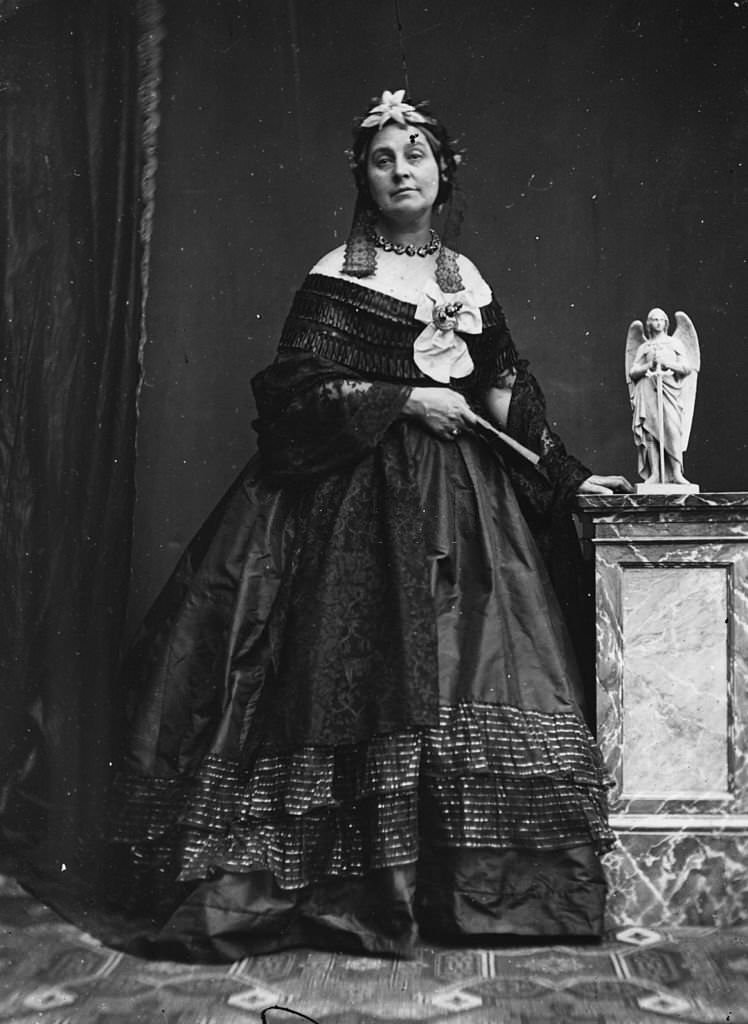
Poised beside a small pedestal topped with an angelic figurine, Caroline Stirling Maxwell is presented in a formal studio setting that reflects the tastes of mid-19th-century portrait photography. Her calm, upward gaze and composed posture suggest a sitter accustomed to being observed, while the dark backdrop and carefully placed props lend the scene a quiet, theatrical gravity.
Fashion takes center stage in the sweeping silhouette of her crinoline gown, a hallmark of 1860s women’s dress. The wide skirt, layered textures, and patterned bands near the hem draw attention to the craftsmanship of Victorian clothing, while her lace sleeves, jewelry, and floral headpiece add intimacy and ornament to the otherwise stately composition. Details like the fan held at her waist reinforce the era’s language of refinement and social display.
Known from the title as an English poetess (1808–1877), Maxwell appears here at the crossroads of literature, culture, and Victorian femininity, where public identity was often shaped as much by presentation as by print. The portrait doubles as a record of Fashion & Culture: a glimpse of how a woman of letters could be framed through costume, symbolism, and studio artistry. For viewers today, it offers an evocative window into 19th-century ideals of elegance, piety, and self-fashioning.