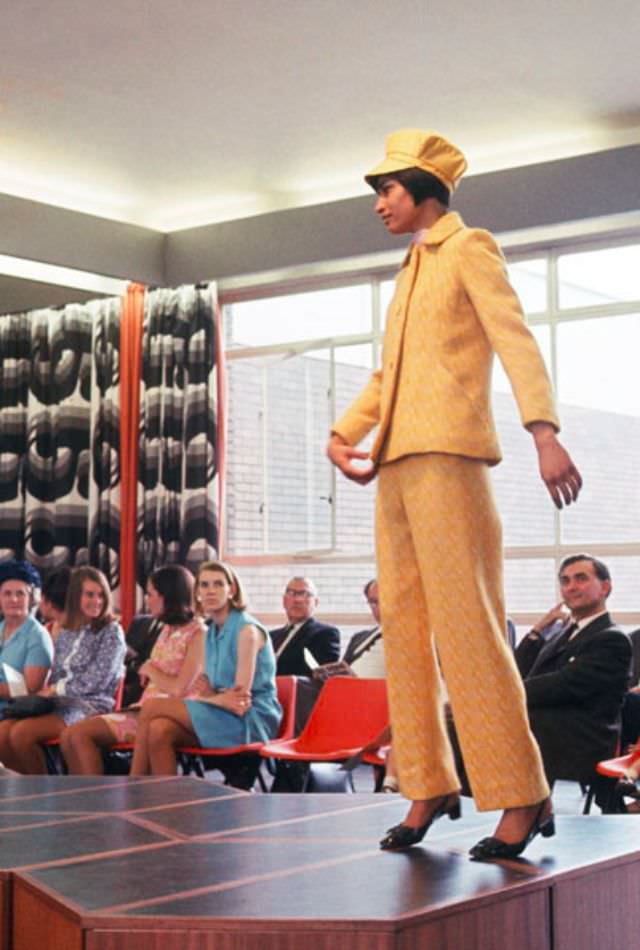
A young model strides along a low, improvised runway in a sharp mustard-yellow ensemble—structured jacket, long skirt, and matching cap—embodying the clean lines and confident polish associated with 1960s fashion. The pose is poised and purposeful, with dark shoes grounding the look and a neat silhouette that feels both practical and aspirational, the sort of outfit designed to be noticed. Even in a candid classroom setting, the styling reads as editorial, suggesting students testing ideas meant for the wider world.
Around the catwalk, classmates and visitors sit close on bright red chairs, their expressions ranging from curiosity to appraisal as they watch the presentation unfold. Daylight spills through large windows, revealing a modern interior that doubles as studio, lecture room, and stage, while patterned curtains add a bold, graphic backdrop. The mix of youthful spectators in colorful dresses and older attendees in suits hints at fashion education as a bridge between experiment and industry, where critiques, approvals, and future opportunities were quietly negotiated.
Manchester’s reputation as a hub of textile know-how gives these glamorous vintage photos extra resonance, linking the city’s manufacturing heritage to the fresh ambitions of its fashion students. The image speaks to a moment when youth culture, tailored design, and classroom creativity collided, producing looks that were modern without losing a sense of craftsmanship. For anyone searching for Manchester fashion history, 1960s style inspiration, or the culture of British design schools, this scene offers a vivid snapshot of learning in motion—ideas literally walking the floor.