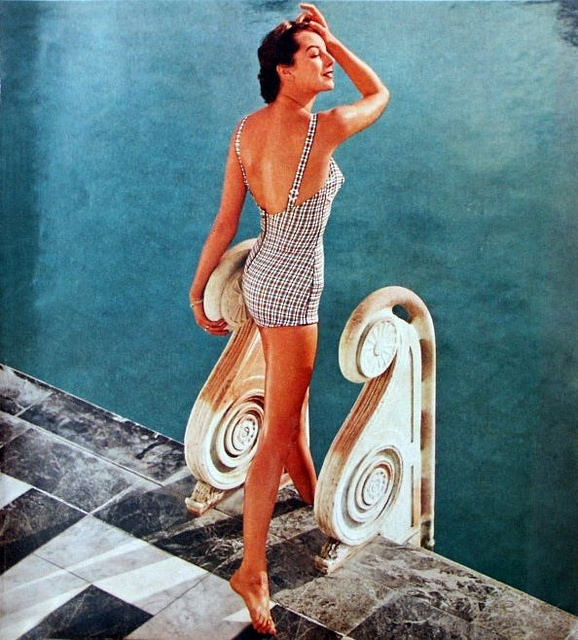
Poised at the water’s edge, a swimsuit model turns away in a classic mid-century stance, one hand lifting to her hair as if caught between a dip and a sunlit stroll. The one-piece suit features a crisp check pattern and a deep, low back, balancing modest coverage with a bold, body-conscious silhouette that became increasingly common in late 1940s and 1950s swimwear fashion. Beside her, decorative scroll-like rails and tiled stonework evoke the resort glamour that helped sell bathing suits as both leisurewear and lifestyle.
Design details do much of the storytelling here: slim straps, structured seams, and a tailored fit suggest the era’s fascination with clean lines and “polished” beach dressing. Prints like gingham and other small-scale checks photographed well and read as sporty-yet-feminine, especially in early color imagery that emphasized freshness and tone. Even the pose—elongated legs, arched back, chin tilted—echoes the look of period fashion advertising, where swimwear was presented as confident, elegant, and carefully styled.
Seen through a fashion-and-culture lens, the photo hints at postwar shifts in recreation, travel, and ideals of beauty, when pools and beaches became stages for modern femininity. Swimwear in the 1940s and 1950s wasn’t only about practicality; it was a conversation between designers, photographers, and consumers about what “summer style” should signal. For readers searching mid-century swimwear, retro resort fashion, or 1950s bathing suit trends, this image offers a vivid snapshot of how sun, sand, and style were packaged into a single, enduring aesthetic.