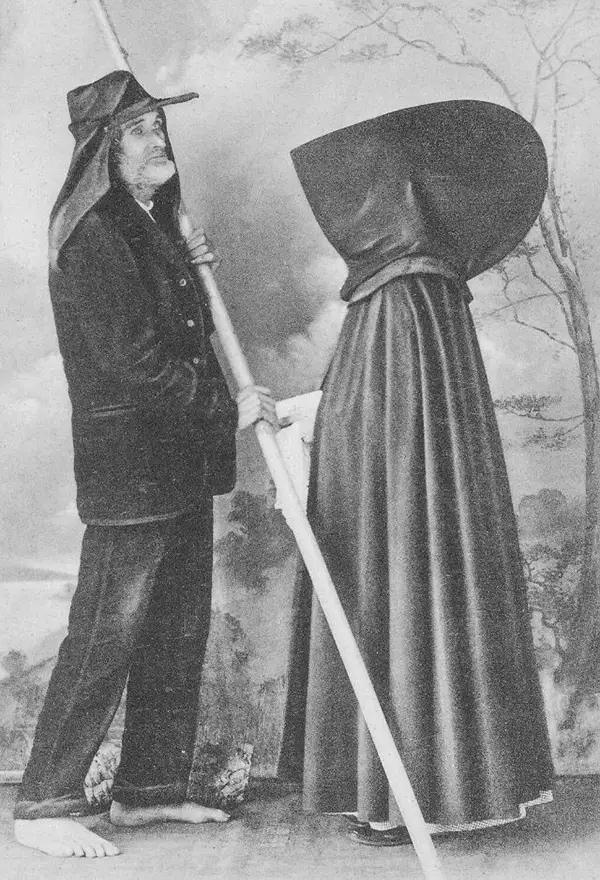
A dramatic, oversized hood dominates the frame, sweeping outward like a sail and turning its wearer into a striking silhouette. The traditional Azorean cape—often associated with Portuguese women’s dress—falls in heavy, dark folds to the ground, emphasizing both modesty and theatrical presence. Even without color, the textures read clearly: the smooth, sculpted hood contrasts with the dense drape of the skirted cloak.
To the left stands a second figure in dark workwear and a brimmed cap, holding a long pole that cuts diagonally across the composition. Their grounded stance and practical clothing set up a visual dialogue between everyday labor and ceremonial or regional fashion, suggesting how traditional attire existed alongside ordinary rural life rather than apart from it. The studio-like backdrop of trees and landscape hints at the romantic way such cultural clothing was often presented for the camera.
Seen through the lens of fashion history and folklore, the Azorean hood functions as more than outerwear—it signals identity, community, and the inventive tailoring of island traditions. These historical photos help document how Portuguese women’s hooded capes shaped a recognizable silhouette, balancing protection from weather with a bold statement of style. For readers interested in Portuguese culture, Azores heritage, and traditional dress, the image preserves a memorable example of regional fashion at once practical and iconic.