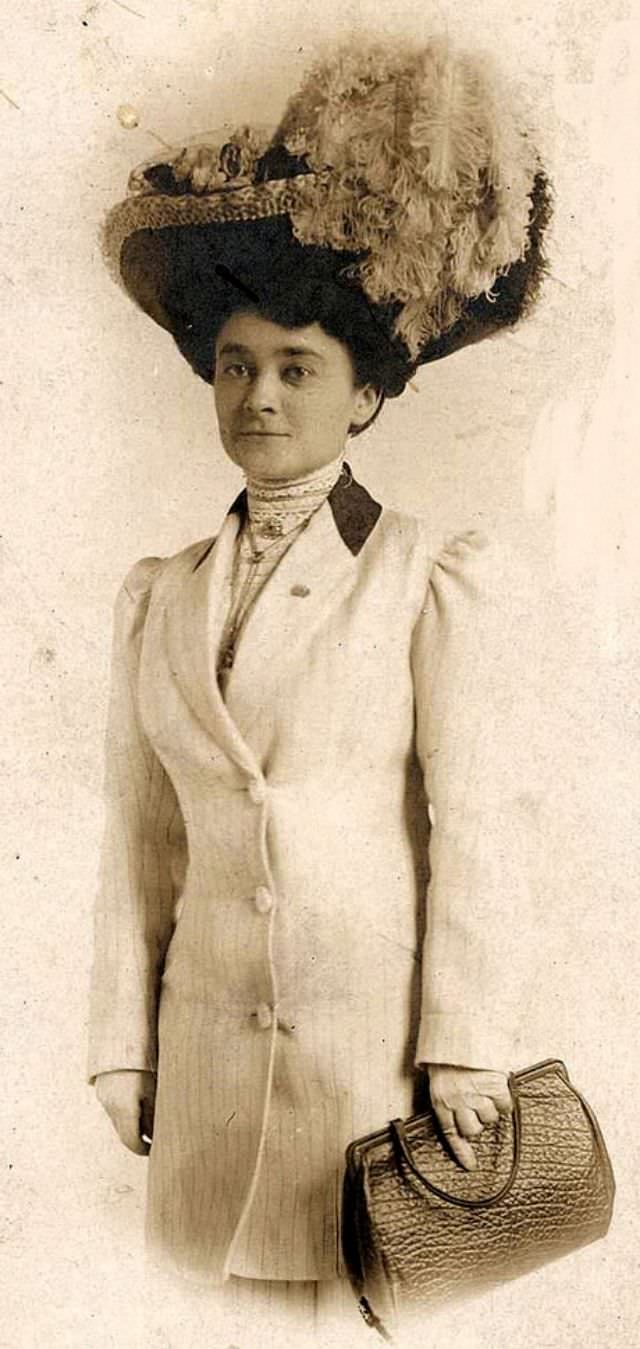
Balanced atop the sitter’s head is an Edwardian-era hat of theatrical scale, its broad, dark brim crowned with a lush spray of feathers and layered trim that draws the eye upward before it ever settles on her calm, self-possessed expression. The portrait’s plain backdrop leaves the millinery to command the frame, turning a simple studio pose into a study of height, texture, and fashionable drama. Even in a softly faded print, the contrast between the hat’s deep tones and the pale clothing hints at the careful visual planning behind early 20th-century women’s style.
Her tailored, light-colored coat—buttoned neatly and shaped through the torso—speaks to the period’s preference for crisp lines and an air of respectability, while a high lace collar and pinned neckline add a refined, decorative finish. In her hand rests a structured handbag with a textured surface, an accessory that reinforces the sense of public life: errands, visits, travel, and the daily choreography of being seen. Together, the hat, coat, and bag form a coherent fashion statement, reminding modern viewers that Edwardian dress was as much about silhouette and social signaling as it was about beauty.
Edwardian hats for women were not merely practical coverings; they functioned as portable architecture, showcasing craftsmanship, luxury materials, and the wearer’s awareness of current taste. The generous brim and ornate featherwork seen here evoke an era when millinery could be the most expressive element of an outfit, framing the face and proclaiming status from across a street or a crowded room. For anyone searching fashion history, women’s Edwardian style, or the cultural significance of early 1900s accessories, this portrait offers a vivid example of how a hat could define an entire look—and, in subtle ways, an entire moment in society.