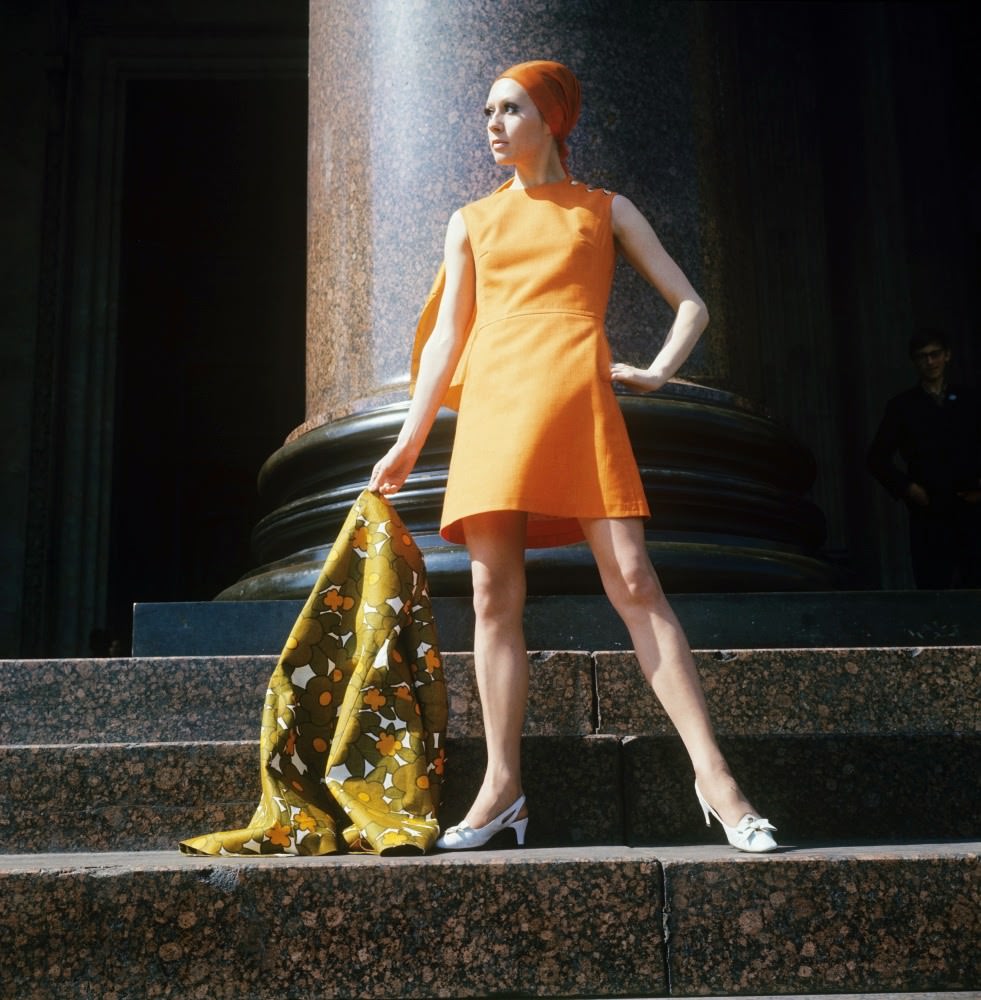
Against a monumental stone column, a young woman strikes a confident pose in a vivid orange shift dress, its clean A-line silhouette echoing the modernist spirit that filtered into Soviet women’s fashion in the 1960s and 1970s. A matching headscarf frames her face and heightens the graphic impact, while white heeled shoes sharpen the look with a crisp, almost futuristic finish. Sunlight cuts across the steps, turning the outfit into a bold block of color against the cool, textured architecture.
In her hand drapes a large floral textile—part scarf, part statement accessory—patterned in warm greens and yellows that speak to the era’s love of prints and practical glamour. The styling suggests a world where ingenuity mattered as much as access: garments made to last, pieces mixed and reworked, and accessories used to bring individuality to standardized wardrobes. The straight seams, simple neckline, and careful tailoring highlight how Soviet fashion often balanced restraint with a desire for elegance and self-expression.
Such imagery fits neatly within a broader journey through Soviet fashion and culture, where public space became an informal runway and a single outfit could signal optimism, modernity, and personal taste. The photograph’s composition—strong lines, heroic scale, and a poised stance—mirrors the period’s fascination with progress and design, even in everyday dress. For readers exploring 1960s–70s Soviet Union women’s style, it’s a striking reminder that color, silhouette, and attitude could be just as “bold and beautiful” behind the Iron Curtain as anywhere else.