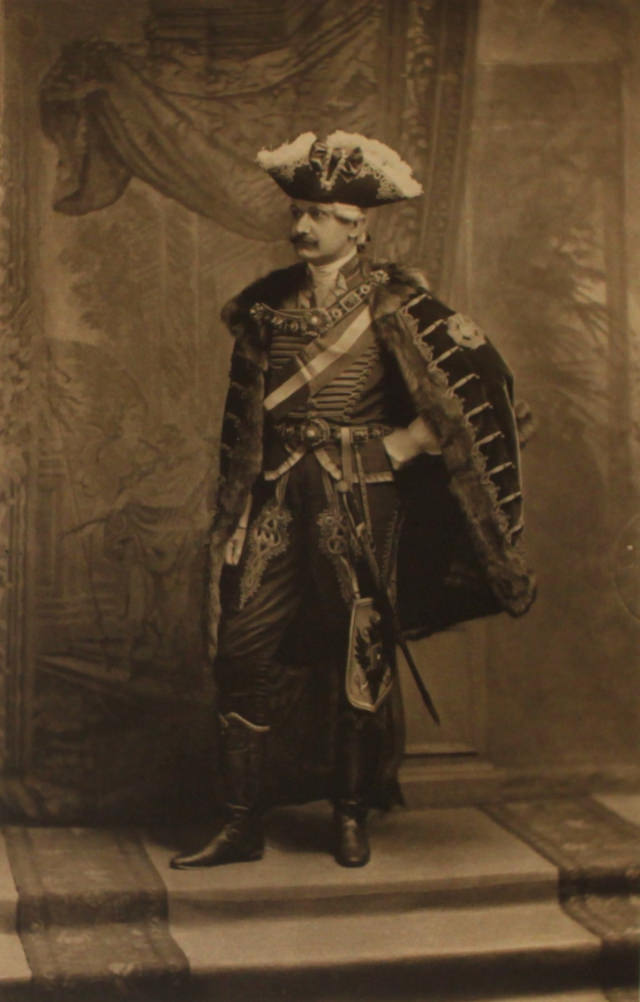
A poised aristocratic figure stands in three-quarter profile, moustached and self-assured, dressed as Count Omar Hadik portraying his own ancestor, Field Marshal Count Hadik. The costume leans into martial grandeur without tipping into caricature: a broad, feathered hat, a sash crossing a decorated chest, and a fur-edged cloak that frames the body like a stage curtain. Even in the soft, sepia tones, metallic trims and braided detailing read clearly, suggesting the careful workmanship and expense behind a single evening’s display.
Uniform elements do most of the storytelling—high boots, fitted trousers, and layered ornament that evokes parade dress rather than battlefield necessity. A sword hangs at the side, more emblem than weapon, while the cloak’s lining and edging hint at heraldic traditions and dynastic pride. Set against a painted studio backdrop, the sitter becomes both performer and historian, using costume to claim continuity and lineage in a way that photography could now fix and circulate.
Among the elaborate outfits associated with the Devonshire House Ball of 1897, this portrayal has the appeal of restraint: it is theatrical, but anchored in recognizable military iconography and family reference. The title’s wry note about it being “the least embarrassing male costume” points to the era’s delicate balancing act between pageantry and propriety, especially for men navigating fancy-dress culture. For modern viewers searching for Victorian high-society fashion, historical costume, and Gilded Age spectacle, the image offers a rich example of how status was performed—through fabric, insignia, and a carefully composed pose.