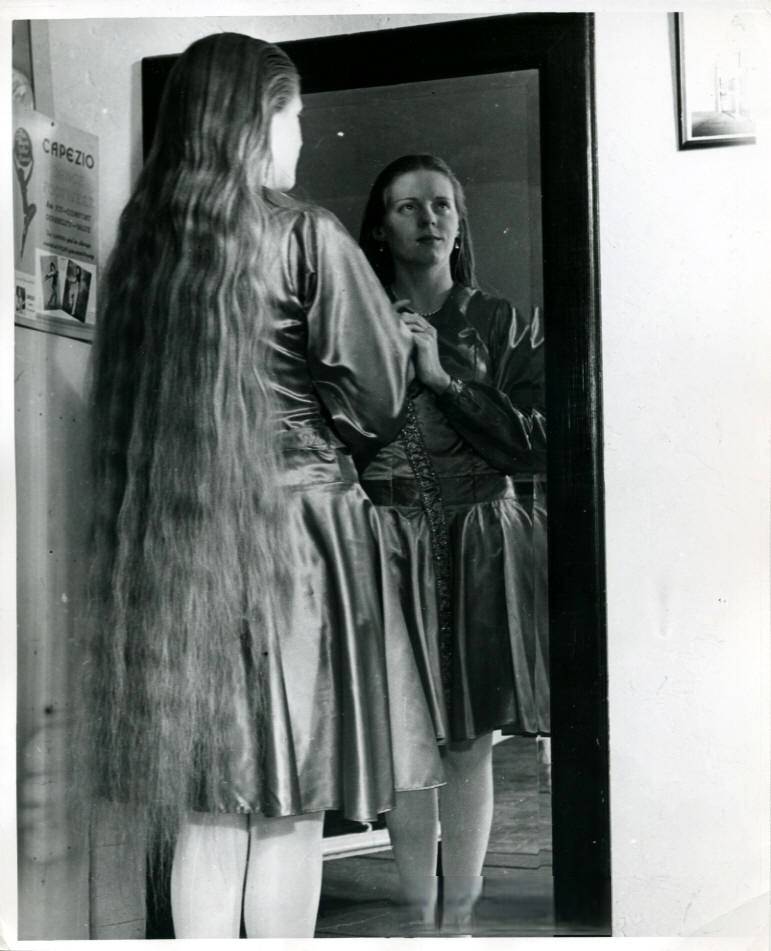
A long curtain of hair falls nearly to the floor as a young woman stands with her back to the camera, facing a tall mirror that returns her expression in crisp detail. The gleam of her satin-like dress catches the light, creating a “specular” shine that turns fabric folds into bright highlights and deep shadows. In the reflection, her calm, slightly serious gaze suggests a private moment of preparation—part self-check, part performance.
Stan Shuttleworth’s fashion-and-culture framing here is less about spectacle than about the quiet choreography of style: hair cared for, garments chosen, posture considered. The composition doubles the subject—one figure seen, one figure mirrored—so the viewer reads both the dramatic length of her flowing locks and the subtle, human presence behind them. Even the surrounding room details, including a wall poster, hint at a world where appearance, artistry, and everyday life overlap.
For readers drawn to vintage fashion photography, long-haired ladies, and the social history of beauty routines, this image offers a richly textured stop in time. It’s a study in sheen and softness, in how reflective surfaces—mirror glass and glossy cloth—shape the way a person is seen and how she sees herself. Flowing Locks invites you to linger on the cultural meanings of hair and dress, while appreciating the photographer’s eye for light, reflection, and mood.