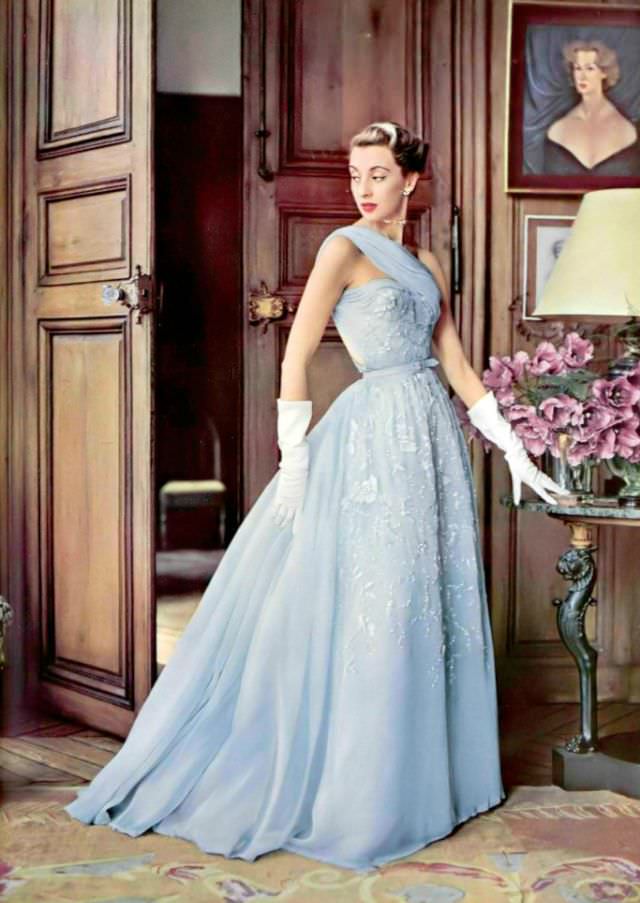
Marie-Thérèse stands poised in a pale blue evening gown of embroidered chiffon by Pierre Balmain, the softly gleaming fabric falling in a full, floor-length sweep that epitomizes early 1950s couture. A cross-over bodice frames the shoulders with elegant restraint, while delicate floral stitching catches the light across the skirt, giving the color a shimmering, almost icy depth. Long white opera gloves and a refined updo complete the look, turning the silhouette into a study in postwar polish and controlled glamour.
Behind her, paneled doors and warm wood tones create a stately interior setting that heightens the gown’s cool, airy hue. She rests one gloved hand on a small, ornate table topped with abundant pink blossoms, a carefully chosen contrast that makes the blue chiffon appear even more luminous. A portrait on the wall and a shaded lamp add to the sense of a private salon, the kind of cultivated backdrop favored by mid-century fashion photography to signal luxury and lineage.
Balmain’s design language comes through in the balance of structure and softness: a cinched waist, a generous skirt, and embroidery that reads as both decorative and architectural. The pose—head turned slightly away, as if caught between arrival and conversation—suggests the social theater of formal evenings, where couture served as introduction and armor at once. As a piece of fashion and culture, the image preserves the optimism of 1952 style: meticulous workmanship, feminine grandeur, and the quiet confidence of Parisian haute couture.