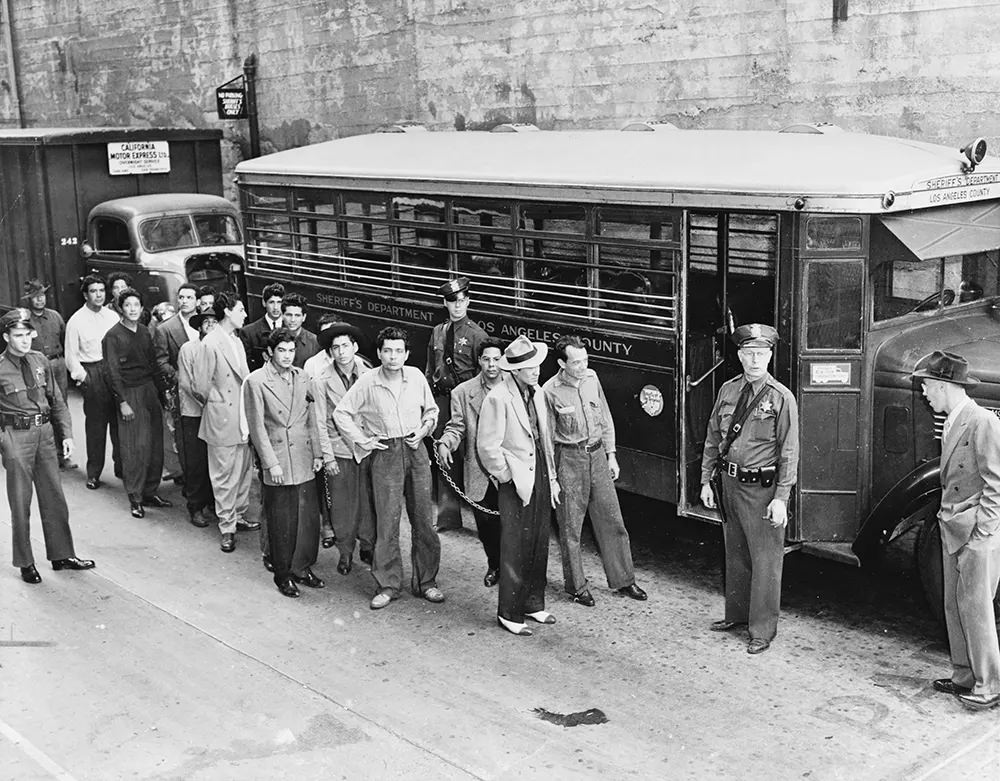
Along a stark wall outside a Los Angeles jail, a line of Mexican American youths stands under the watch of uniformed deputies, waiting to be taken to court. The men wear the hallmarks of the zoot-suit era—broad-shouldered jackets, high-waisted trousers, sharp shoes, and tilted hats—fashion that read as confidence and modern style to its wearers, and as provocation to many of their critics. Behind them looms a barred sheriff’s transport bus, its lettering and metal grilles making the scene feel as much like a procession as a transfer.
Clothing is the first thing the eye catches, but the real subject is power: who gets watched, who gets searched, and who gets displayed. Some faces turn toward the camera with guarded expressions, while others stare past it, as if already rehearsing the next ordeal. A chain links several of the detainees, a blunt reminder that public order in this moment was enforced not only through courts and headlines, but through visible restraint in the street.
The title’s reference to “zoot suiters” places the photo in the broader history of the Zoot Suit Riots and the wartime tensions that turned youth culture into a battleground over race, belonging, and American identity. In Los Angeles, the zoot suit became more than fabric; it was a symbol onto which fears about crime, patriotism, and immigration were projected. As an artifact of fashion and culture, the image preserves a charged intersection of style and surveillance—one city’s struggle over who could claim dignity in public, and at what cost.