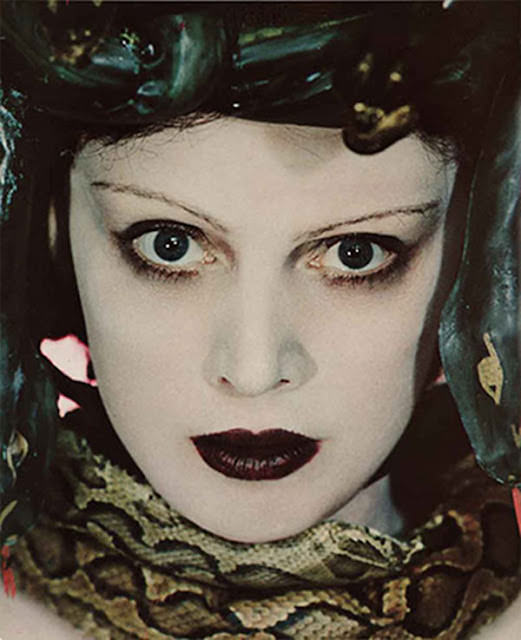
Mrs Edward Mayer meets the viewer head-on as Medusa, her pale, sculptural makeup and dark, lacquered lips turning a mythic monster into a poised society portrait. The frame is tight and confrontational, built around an unblinking gaze that feels both inviting and warning, as if the legend’s petrifying power has been translated into pure photographic presence. Even without a visible setting, the styling announces theatrical ambition—high-fashion elegance sharpened into something uncanny.
Coiled snakes and scaled textures crowd the edges of the composition, suggesting a living headdress and a creeping collar that blur where costume ends and creature begins. The color treatment—rich shadows, cool skin tones, and deep reds—heightens the drama in a way that feels distinctly modern for early color photography, with every highlight and contour carefully controlled. That tension between glamour and menace is the point: Medusa becomes an icon, not a caricature, with beauty used as a kind of weapon.
Within the broader tradition of women staged as goddesses and figures from classical myth, this portrait sits at the crossroads of fashion photography, studio experimentation, and cultural fantasy. It reflects a moment when costume, cosmetics, and new photographic processes could reinvent familiar stories for contemporary audiences, turning mythology into visual spectacle. For historians of style and image-making, “Mrs Edward Mayer as Medusa” remains a striking example of how the camera could mythologize modern femininity—intimate, daring, and unforgettable.