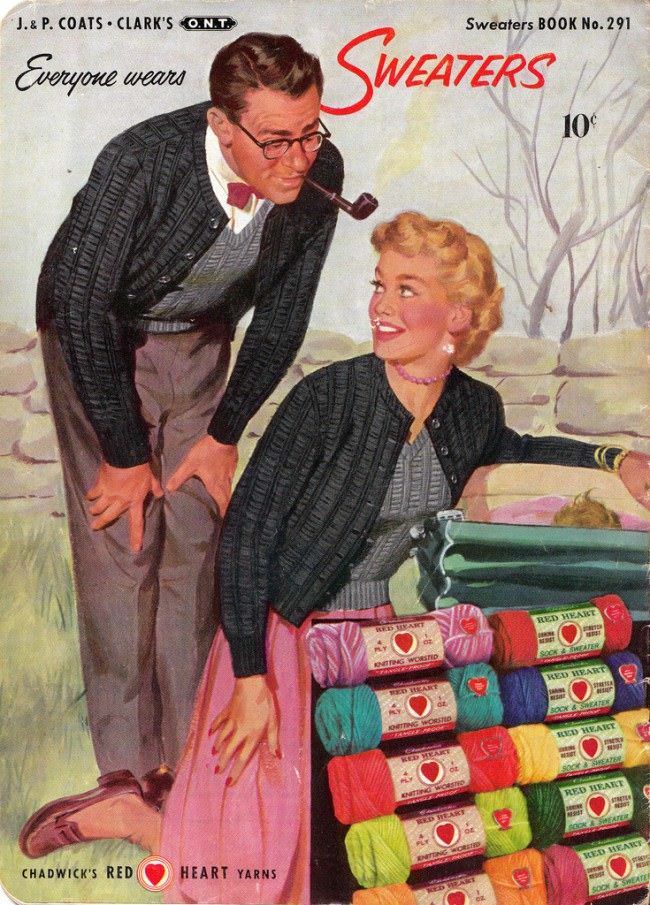
Bold, hand-lettered “Sweaters” sprawls across a mid-century pattern booklet cover, sold for 10¢ and branded by J. & P. Coats and Clark’s O.N.T. The illustration leans into cozy aspiration: a cardigan-clad man with glasses and a pipe bends toward a seated blonde woman, both dressed in textured knit layers that read as equal parts practical and polished. Bare winter trees and a low stone wall set a crisp outdoor mood, turning everyday knitwear into a scene of courtship and calm domestic confidence.
At the woman’s side, a vivid stack of Red Heart yarn skeins—pinks, greens, blues, and reds—acts like a product display and a promise of possibility. The careful ribbing, patterned panels, and neat button fronts suggest the era’s fascination with “smart” casualwear, when handknits were marketed as fashionable wardrobes rather than hobby projects. Even the styling—pearls, a bright smile, a fitted silhouette—signals how knit and crochet culture sold warmth without sacrificing allure.
Placed against the post’s theme of “Sexy Yarn,” the image becomes a useful foil: it hints at the mainstream respectability from which later, more daring 1970s designs would push outward. Pattern books like this helped normalize making clothing at home, and once the skills were widespread, bolder cuts, clingier stitches, and more revealing constructions could ride the same DIY pipeline into fashion and culture. For readers searching the history of knitting and crochet, vintage sweater pattern covers like this chart the shift from wholesome coordination to the liberated experimentation that would soon redefine handmade style.