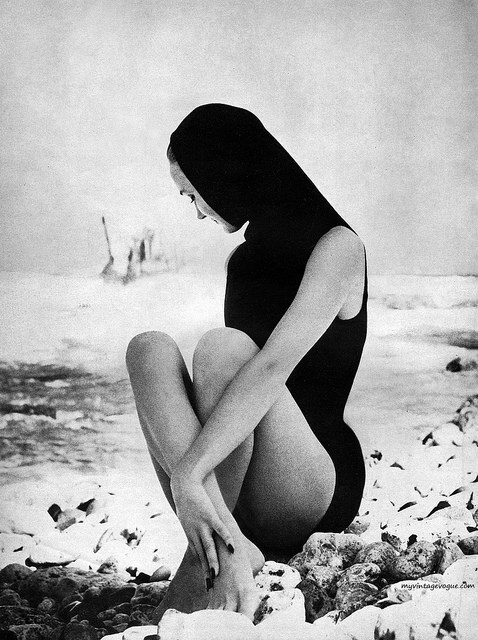
Against a pale shoreline and restless surf, a lone bather sits curled on the pebbles in a sleek, dark swimsuit with a hooded cap that frames her profile. The strong, uninterrupted lines of the suit—more sculptural than frilly—echo the era’s fascination with clean silhouettes and practical elegance, when beachwear had to balance modesty, movement, and modern style. In the distance, faint figures and a hint of activity on the water underscore that this is a lived-in seaside scene, not a studio fantasy.
Swimwear fashions of the 1940s and 1950s often revolved around controlled glamour: streamlined one-pieces, built-in structure, and thoughtful coverage that still celebrated the body’s shape. The pose here reads almost like fashion illustration brought to life, emphasizing the cut of the leg, the smooth fit at the torso, and the confident simplicity of a single, dark tone against bright sand and sea. Details like the close-fitting head covering also speak to a time when coordinated accessories—caps, wraps, and matching pieces—could be as important as the suit itself.
Sun, sand, and style come together in this quiet moment, inviting a closer look at how beach culture helped redefine everyday femininity in the mid-20th century. As postwar leisure expanded and seaside holidays became more attainable, swimsuits turned into cultural signals—of sportiness, sophistication, and changing ideas about public appearance. For readers drawn to vintage fashion, coastal nostalgia, and the history of women’s clothing, this photo offers a crisp window into how the shoreline became a runway of its own.