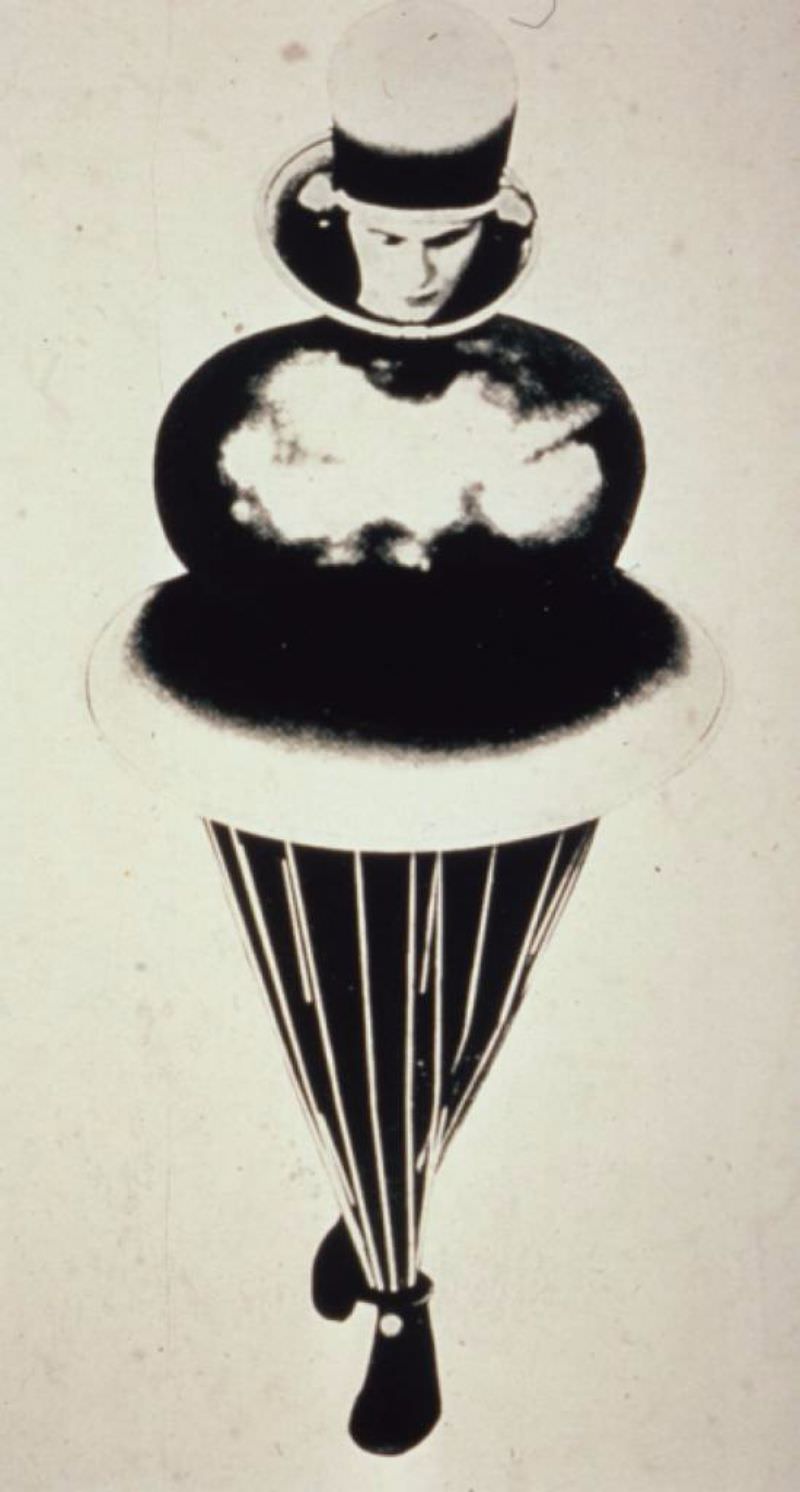
A solitary dancer appears less like a person than a carefully engineered object, crowned with a smooth cylindrical cap and framed by a rigid circular collar. The face, pale against deep shadows, is set into a stacked composition of rounded forms that read as spheres and discs, turning the human figure into a living geometry lesson. Shot against an empty, light backdrop, the costume’s stark contrast and clean silhouette make every curve and edge feel deliberate, almost architectural.
Below the torso, the outfit narrows into a sharply tapered, striped cone that suggests both motion and restraint—movement imagined through lines rather than exposed limbs. The bulbous midsection and the tight funnel shape create an uncanny balance between comedy and futurism, a surreal fashion statement that belongs to the avant-garde stage rather than the street. Even in stillness, the design implies choreography: a body compelled to pivot, glide, and rotate according to the rules of its costume.
In the context of Roaring Twenties fashion and culture, images like this speak to a decade fascinated by modernity, machines, and radical new aesthetics in theater and dance. The Triadic Ballet’s geometric costumes turned performers into abstract characters, blending design, performance art, and early modernist experimentation into a single visual language. For historians and collectors, this photograph endures as an iconic glimpse of interwar creativity—where costume became sculpture, and dance became a diagram of the modern age.