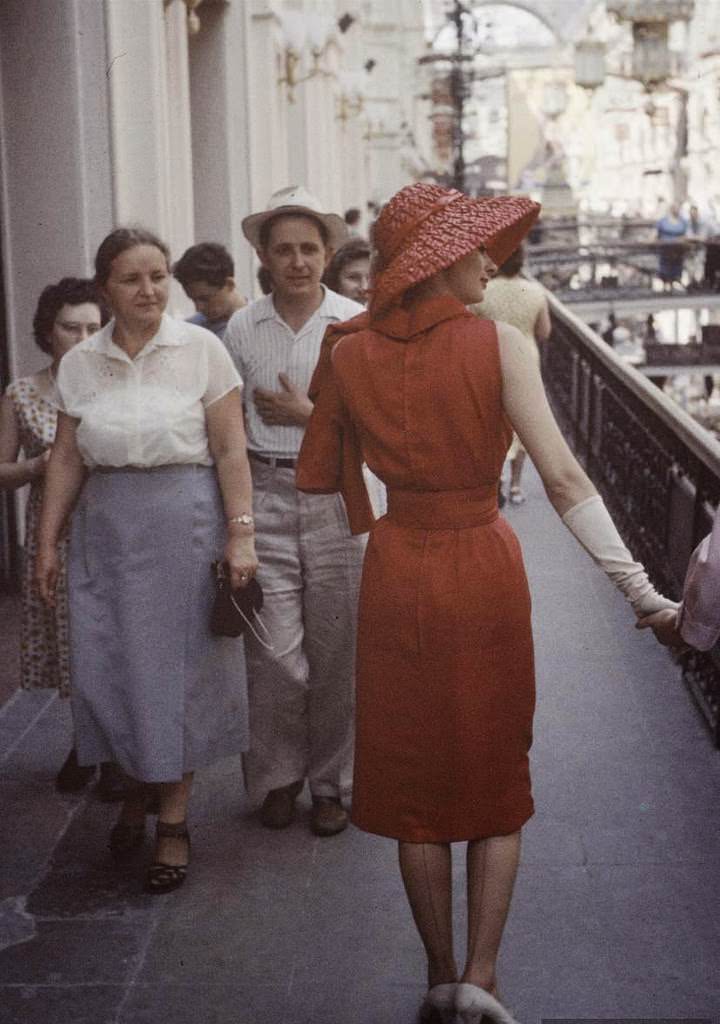
A flash of Parisian red cuts through an ordinary Moscow sidewalk scene: a woman in a sharply tailored dress, long gloves, and an exaggerated wide-brim hat pauses near a railing while pedestrians drift past. The contrast is immediate—practical shirts, simple skirts, and workaday shoes around her, and then this deliberate, sculpted silhouette that seems to demand space. Faces turn, eyes linger, and the street becomes an impromptu runway without anyone announcing a show.
The title’s “1959 fashion shock” makes sense in the small details: the cinched waist, the careful drape of fabric, the poised stance that reads like confidence imported along with couture. In an era when culture carried political weight, clothing could feel like more than personal taste—it could signal aspiration, modernity, even a quiet argument about what life might look like. Here, the encounter between a Dior-like look and Soviet streetwear is less a clash than a moment of fascination, where curiosity does the talking.
For readers drawn to Cold War culture, Soviet history, and the story of Western fashion behind the Iron Curtain, this historical photo offers a vivid doorway into Moscow’s late-1950s urban mood. It’s a reminder that trends don’t travel only through boutiques and magazines; they travel through glances, conversations, and the bold decision to wear something unforgettable in public. The result is a street-level snapshot of fashion as soft power—one outfit turning a city block into a cultural event.