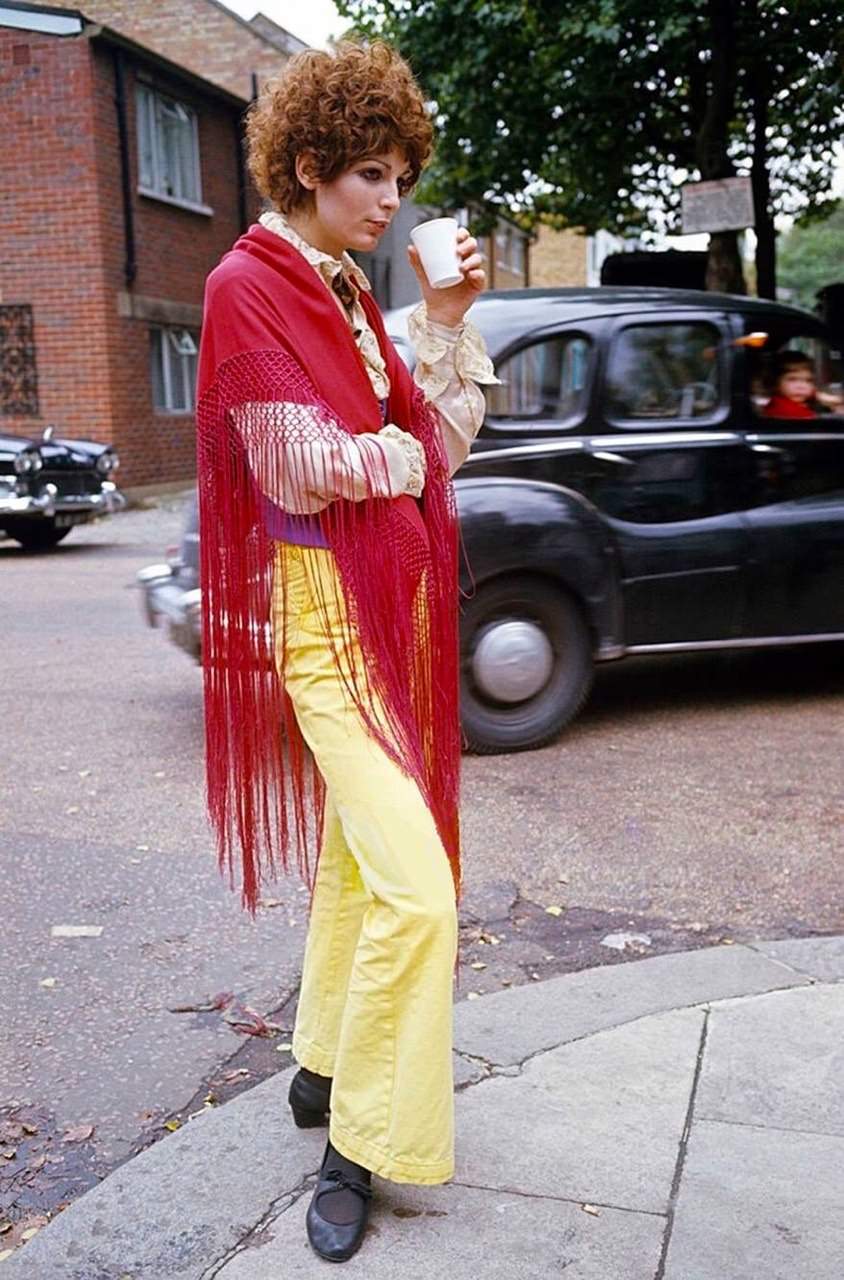
Against an ordinary London street of brick flats and passing traffic, a young woman pauses at the curb with a paper cup in hand, her gaze turned thoughtfully to the side. The everyday backdrop—tree shade, a dark taxi gliding by, a second car nosed into view—makes the colors on her outfit feel even louder, as if the decade’s optimism has spilled out onto the pavement. It’s a candid kind of glamour: not staged in a studio, but worn confidently in public where fashion becomes part of the city’s rhythm.
Her look leans into the psychedelic, hippie-tinged spirit associated with 1960s London style—bold, eclectic, and playful with texture. A long red fringed shawl drapes dramatically over a ruffled blouse, while bright yellow flared trousers and chunky dark shoes ground the silhouette in youth-culture practicality. The curly, voluminous hair frames her face like a statement accessory of its own, echoing the era’s love of expressive shapes and individuality.
What lingers is the way color reads as attitude rather than decoration, signaling a moment when street fashion began to challenge older rules of taste and restraint. The fringe sways, the flares lengthen the stride, and the mix of soft ruffles with vivid hues suggests a wardrobe built from experimentation and self-definition. For anyone searching the history of psychedelic fashion, hippie influences, and London’s 1960s style revolution, this scene offers a vivid reminder of how radical it could feel simply to dress brightly and step outside.