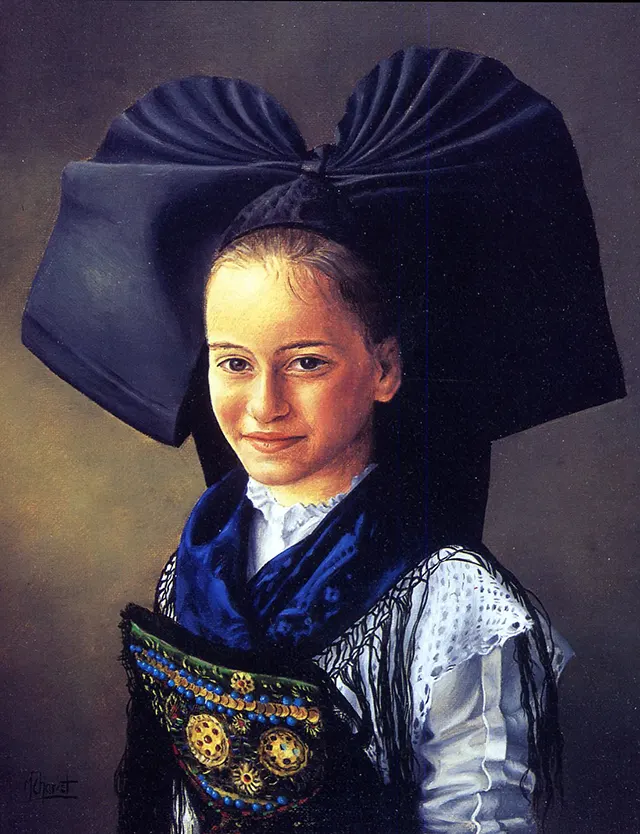
Dominating the portrait is the dramatic Schlupfkapp, its wide, bow-like silhouette framing a young wearer’s face with unmistakable Alsatian flair. The deep, inky fabric reads as both practical and ceremonial, turning a simple head covering into a powerful visual emblem. Set against a subdued background, the headdress becomes the focal point, anchoring the viewer’s attention on regional dress and identity.
Beneath the headpiece, the clothing layers speak the language of tradition: a crisp white blouse, a dark shawl, and an elaborately decorated bodice that glints with beadwork and metal-like ornaments. The careful textures—sheer lace at the collar, fringed elements, and dense embroidery—suggest craft passed through households and workshops rather than fleeting fashion. Together, these details create a vivid record of Alsatian folk costume, where color, materials, and adornment communicate community belonging as much as personal style.
More than an accessory, the Schlupfkapp functions as cultural shorthand, recalling Alsace’s distinctive heritage at the crossroads of European influence. Portraits like this helped preserve the look of regional attire, especially as modernization reshaped everyday dress and local customs. For anyone exploring Alsatian identity, traditional headwear, or the history of folk fashion, the image offers a clear, memorable symbol of continuity through the ages.