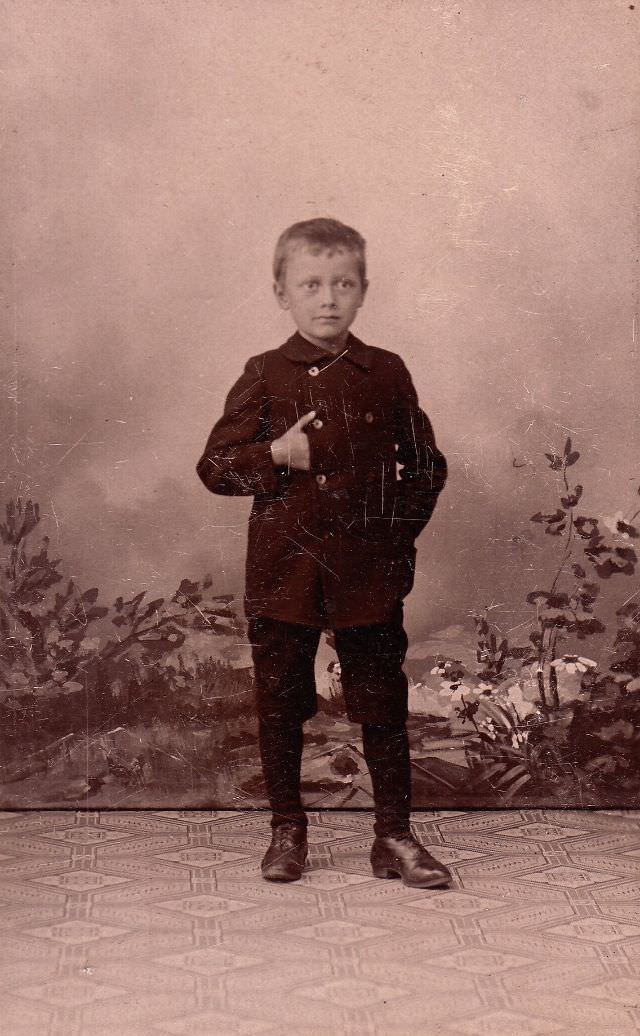
A solemn little boy stands posed against a painted studio backdrop, the kind trimmed with leafy scenery to suggest an outdoor world. His dark, buttoned jacket sits neatly over matching knee-length trousers, and the strong line of his collar frames a face that looks both curious and carefully composed. One hand tucks into a pocket while the other lifts in a small, almost instructive gesture, as if the photographer has asked for a pose that signals confidence and good breeding.
Clothing like this speaks to Victorian-era ideas about childhood and respectability, when boys were dressed as miniature gentlemen for formal portraits. The tailored suit, sturdy boots, and dark stockings emphasize practicality and discipline, while the crisp front buttons and structured cut show the importance placed on order and presentation. Even without bright color, the outfit reads as intentional and “best,” suggesting it may have been reserved for church, visiting, or a special sitting at the studio.
Details in the setting reinforce the period’s portrait conventions: patterned flooring underfoot, soft studio lighting, and a decorative backdrop that flatters the sitter without distracting from his clothes. For anyone researching Victorian boy’s fashion and culture, the image offers a clear view of common elements—short trousers paired with long stockings, a fitted jacket, and polished footwear—capturing how families used dress to communicate status, manners, and aspirations.