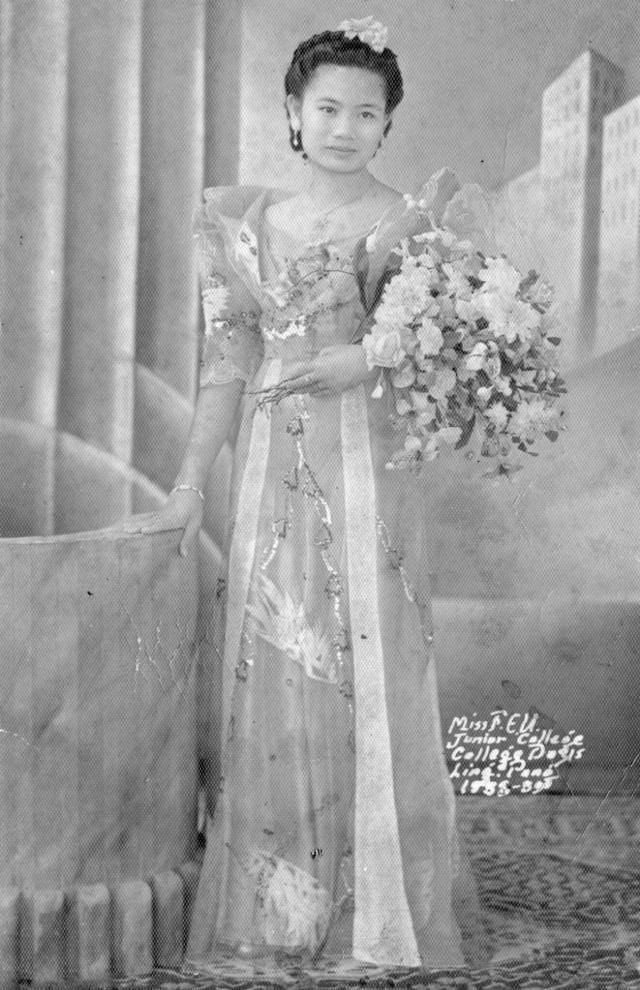
Grace and poise define this studio portrait of a Manila lady from the early 1900s, posed against a painted backdrop that hints at an idealized cityscape. She stands in a formal gown with a soft, structured bodice and flowing skirt, the fabric catching light in pale tones that read as satin or similarly lustrous material. A large bouquet—likely chosen for both fragrance and symbolism—adds texture and movement, contrasting with her composed expression and careful posture.
Fashion details reward a closer look: a neatly arranged updo adorned with a floral accessory, delicate earrings, and a bracelet that suggests occasion rather than everyday wear. The dress silhouette reflects a period when Western-inspired tailoring blended with local taste, producing an elegant look suited to studio portraiture and public presentation. Even the subtle hand placement and the way her bouquet is cradled feel rehearsed, as if the photographer and sitter collaborated to project refinement, education, and modern femininity.
In collections of vintage portraits like this, Manila’s social world comes into focus—how women navigated new ideas of style, respectability, and cultural identity during a changing century. The painted set, the carefully chosen attire, and the handwritten studio markings at the edge of the print all speak to photography as both art and social document. For readers searching Manila vintage portraits, 1900s fashion, or Philippine cultural history, this image offers a vivid glimpse of how elegance was staged, worn, and remembered.