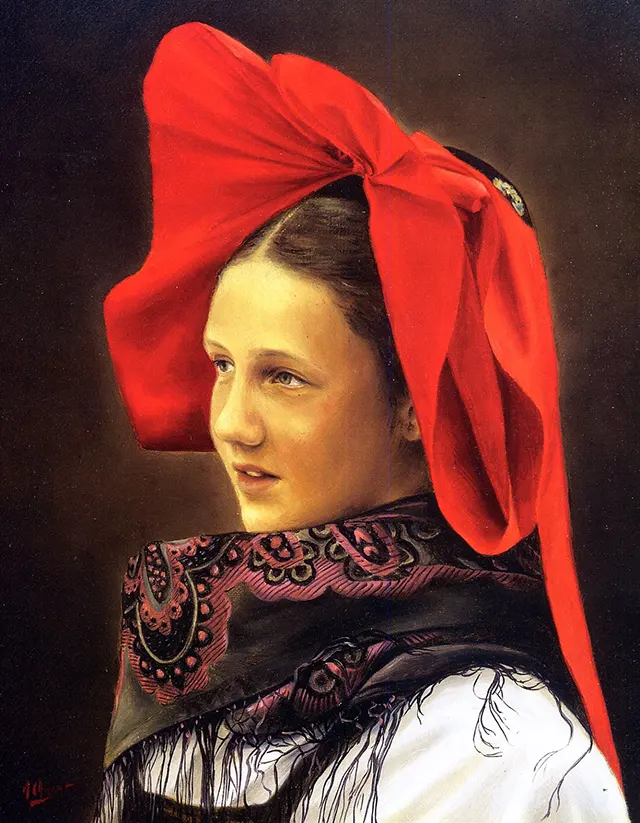
A sweeping red bow crowns the sitter’s head, its generous loops and trailing ends instantly recalling the Schlupfkapp associated with Alsatian folk dress. Shown in profile against a dark, uncluttered background, the young woman’s calm expression draws attention to the structure and drama of the headdress, where fabric becomes as much a statement as ornament. The bold color and careful lighting suggest an image made to celebrate regional style rather than everyday practicality.
Along her shoulders lies a richly patterned shawl with fringe, layered over a pale blouse, creating a tapestry of textures that complements the vivid headpiece. The styling feels deliberate and ceremonial, pointing to the way traditional clothing often served as a visual language—signaling community ties, local pride, and continuity across generations. Even without a visible setting, the portrait’s focus on costume details makes it a valuable reference for fashion and cultural heritage research.
For readers drawn to Alsace history, the Schlupfkapp has long carried meanings beyond fashion, standing as an emblem of identity in a borderland shaped by shifting influences. Images like this helped fix the silhouette of the headdress in the public imagination, turning a regional accessory into a symbol repeated in postcards, illustrations, and heritage displays. As a piece of cultural storytelling, the portrait preserves not only what was worn, but how tradition was presented—boldly, beautifully, and with enduring resonance.