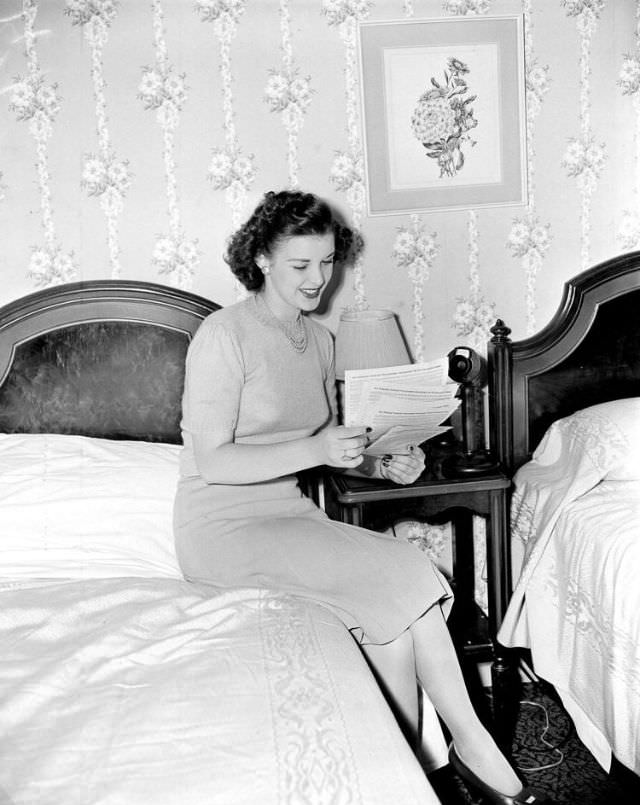
Venus Ramey, crowned Miss America 1944, sits at the edge of a neatly made bed, smiling down at a stack of congratulatory telegrams. Her tailored dress and softly waved hair reflect the polished, understated glamour of mid-1940s fashion, while her relaxed posture makes the moment feel private rather than staged. A bedside table anchors the scene with a classic candlestick-style telephone, hinting at the busy communications that followed a national title.
Behind her, floral wallpaper and a framed botanical print create a domestic, almost hotel-like intimacy, a calm backdrop to the sudden rush of public attention. Two beds and a small lamp suggest shared quarters typical of travel and pageant schedules, where winners moved from spotlight to sitting room with little pause. The crisp linens and dark wood headboards add a touch of formality, reinforcing the era’s emphasis on propriety even in candid downtime.
Reading telegrams was more than a pleasant ritual; in 1944 it was a tangible measure of fame, with messages arriving from admirers, sponsors, and hometown supporters. The photograph balances glitz and grit—public celebration filtered through the everyday objects of wartime America, when paper, wire, and patience carried words across long distances. As a piece of fashion and culture history, it preserves the quieter side of the Miss America pageant: a young woman absorbing the meaning of her crown one message at a time.