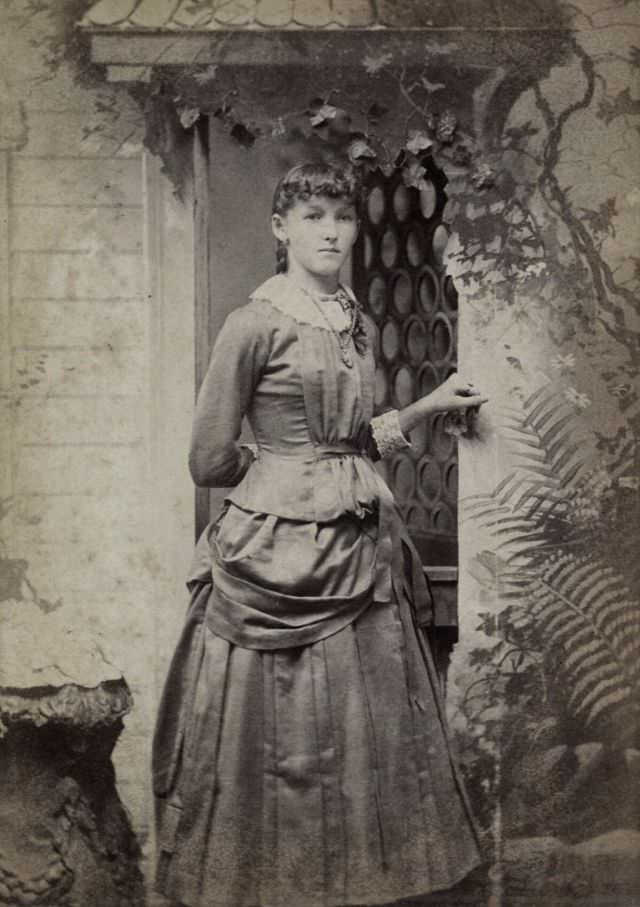
Poised at a garden doorway, a young woman meets the camera with a calm, steady gaze, one hand lightly resting against the frame. The studio setting is dressed to suggest springtime—trailing vines above her shoulder, a patterned glass panel behind, and ferns spilling into the foreground—creating a soft, cultivated scene that feels both domestic and theatrical. In keeping with the title, the portrait is linked to Sunbeam Gallery in Peoria, Illinois, a reminder of how local studios crafted idealized seasonal backdrops for their clientele.
Her outfit speaks clearly to late-19th-century women’s fashion, balancing structure and decoration in a way that reads as both formal and wearable. A fitted bodice with a defined waistline gives way to a full skirt, while the layered drapery and gathered fabric add volume and movement without overwhelming her frame. Lace at the collar and cuffs, along with a simple necklace, provides delicate contrast to the heavier textiles, drawing the eye to her face and hands.
Beyond its charm as a “springtime” vignette, the portrait offers a useful glimpse into how photography shaped public presentation and personal identity in the 1890s. Studio portraits like this were carefully arranged collaborations—between sitter, photographer, and props—designed to signal refinement, modern taste, and respectability. For readers searching women’s fashion history, Victorian-era portrait photography, or Peoria, Illinois cultural life, this image stands as a quietly vivid piece of everyday elegance.