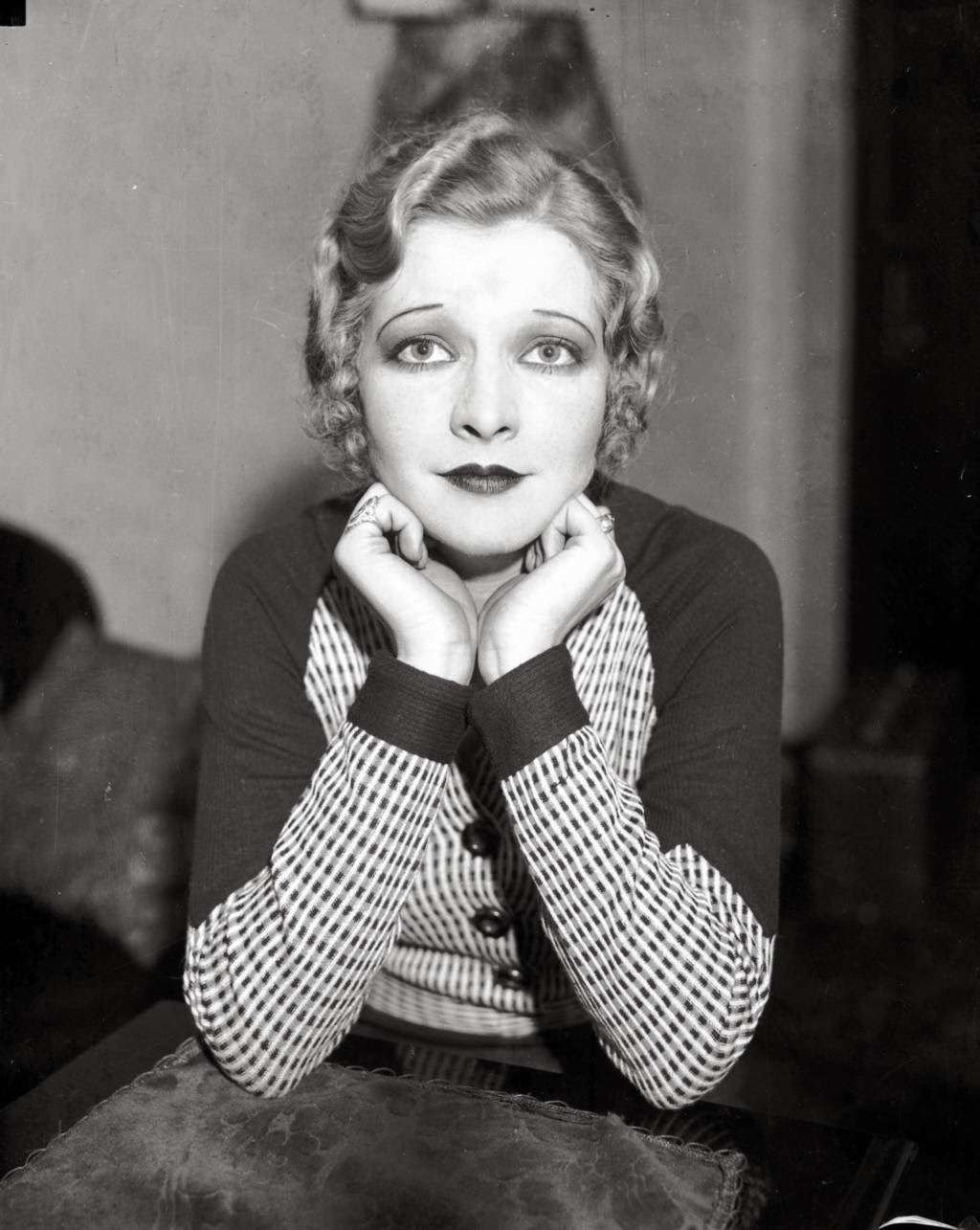
Evelyn Cushing meets the camera with a poised, almost conversational stillness, her chin resting on interlaced hands as soft curls frame her face. The portrait leans into the glamour language of the early 1930s—arched brows, carefully defined lips, and studio lighting that smooths the scene into a polished, magazine-ready moment. Even the patterned sleeves and dark cuffs read as deliberate styling, designed to draw the eye back to her expression.
At 24, Cushing won Miss Illinois in 1932 and carried that title forward to the Miss America competition, a path that linked local acclaim to national attention. Beauty pageants of this era were as much about modern femininity and public presentation as they were about looks, and photographs like this helped shape how contestants were introduced to audiences beyond the theater or the stage. The result is a snapshot of celebrity-in-the-making, where personality is suggested as much by pose as by wardrobe.
For readers exploring Fashion & Culture, this image sits at an interesting crossroads between late flapper influence and the sleeker, more refined styles that followed. It’s a reminder that “beauty queen” was already a media role—crafted through studio portraiture, press captions, and carefully managed charm. Seen today, Evelyn Cushing’s Miss Illinois story offers a vivid window into early pageant history, classic 1930s glamour, and the evolving ideals of American style.