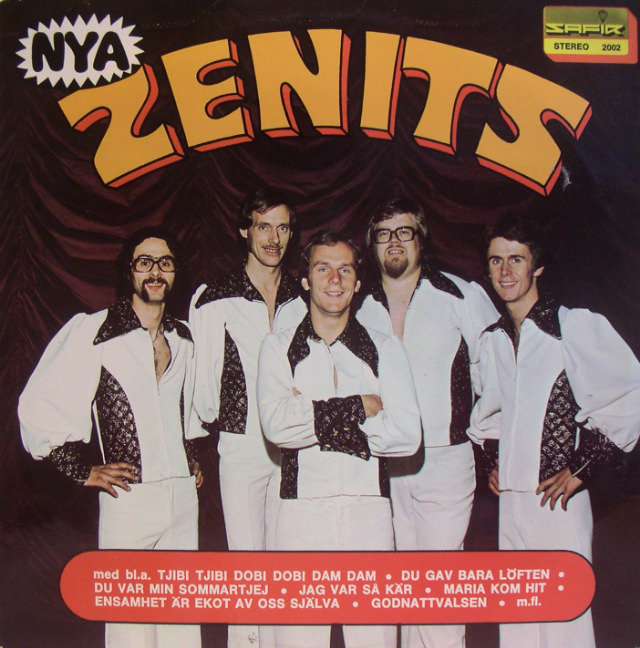
Bold typography crowns the cover as “NYA ZENITS” arcs overhead, setting a playful, high-energy tone before a note is even heard. Five men pose like a close-knit stage unit, framed by dark, theatrical drapery that makes their pale outfits pop and amplifies the album’s showbiz confidence. A small “Stereo” label in the corner and a tracklist band along the bottom reinforce the unmistakable look of a vintage Scandinavian record sleeve.
White suits with wide, pointed collars and patterned dark shirtfronts channel the era’s love of sharp tailoring and nightclub glamour, while moustaches, sideburns, and thick glasses add personality and instant period cues. The styling balances coordinated uniformity with individual flair—hands on hips, relaxed grins, and a frontman stance that reads as both approachable and performance-ready. It’s a snapshot of how Swedish men’s fashion on album covers could be daring without abandoning polish.
As a piece of fashion-and-music history, the cover works like a visual advertisement for modernity: crisp stagewear, friendly charisma, and graphic design meant to stand out in a record shop. The Swedish text in the song list hints at local audiences and homegrown pop culture, while the overall aesthetic—clean, bright, and slightly flamboyant—speaks to a broader moment when bands sold a lifestyle as much as a sound. For collectors and style researchers alike, it’s a compact lesson in vintage menswear, album-cover branding, and the confidence of a band ready for the spotlight.