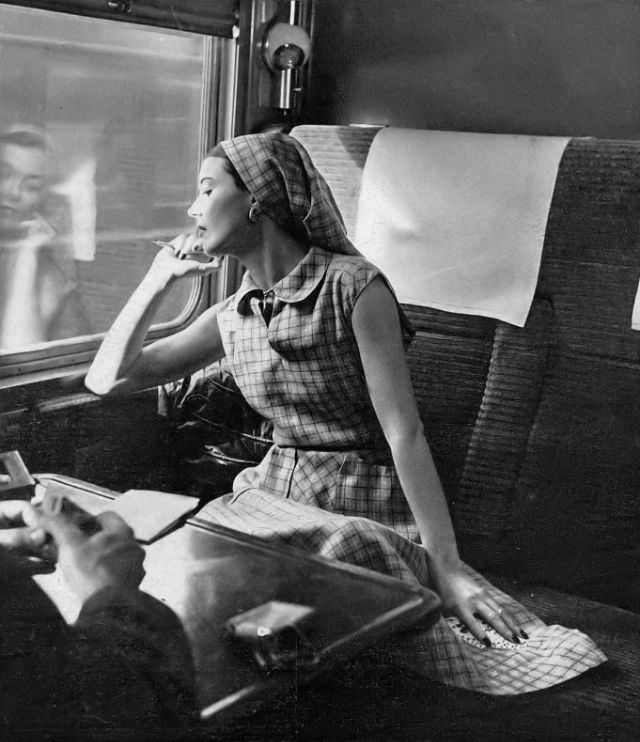
Leaning toward the train window, a poised model drifts into a quiet moment of mid-century travel, chin resting on her hand as the landscape blurs beyond the glass. The compartment’s details—upholstered seat, crisp white headrest cover, and a small table with papers and a clutch-like bag—ground the scene in the everyday luxury of postwar rail journeys. Soft light and reflection on the window create a dreamy, editorial mood that feels both candid and carefully composed.
Her “ideal travel dress,” credited to Henry Rosenfeld for Harper’s Bazaar in 1947, turns practical wear into polished style: a sleeveless, button-front silhouette with a neat collar and belted waist designed for long hours in transit. The tattersall-checked linen described in the title—red and white on tan—would have read as crisp patterning even in monochrome, emphasizing texture and tailoring. A matching headscarf completes the look, suggesting the era’s fascination with coordinated ensembles that stayed immaculate from platform to destination.
Fashion photography of the 1940s often staged elegance in motion, and this image belongs to that tradition, presenting travel as both experience and aspiration. The setting subtly sells modern mobility—train travel as a chic, efficient connector between cities—while the clothing promises comfort without sacrificing refinement. As a Harper’s Bazaar feature, it captures the period’s cultural pivot toward streamlined wardrobes, sporty sophistication, and the romance of the journey itself.