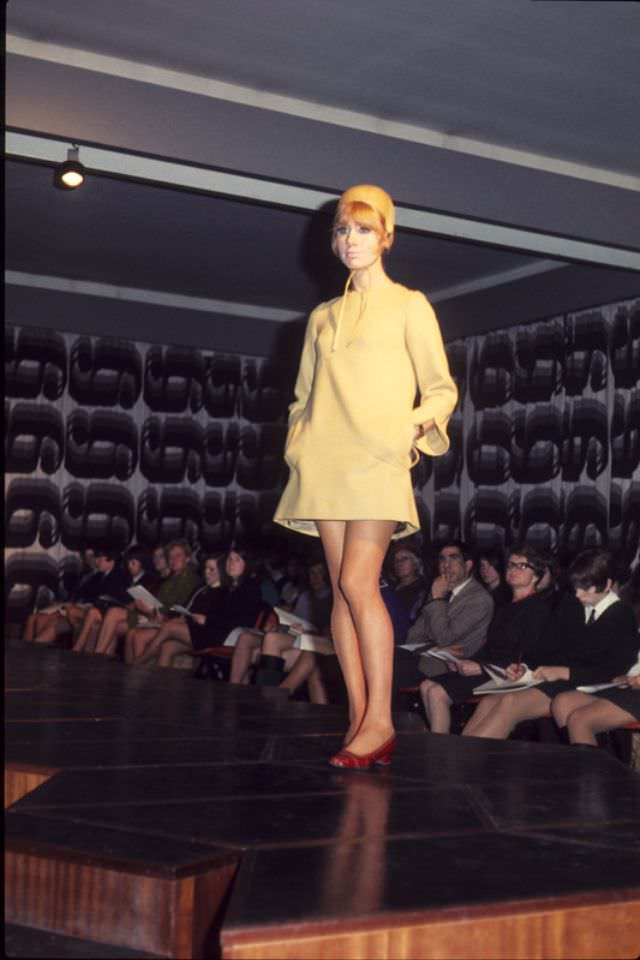
A poised young model steps along a modest catwalk, her pale shift dress skimming the thigh in a quintessential 1960s silhouette. The clean lines, soft fabric, and high neckline read as student-smart rather than couture—yet the look is finished with confidence, from the sleek head covering or hair wrap to the glossy red shoes that punctuate the outfit with pop-art boldness. Overhead lighting and the reflective runway surface add a theatrical sheen, turning a classroom-scale presentation into an event.
Around the stage, an attentive audience sits close enough to study every seam, hem, and movement, suggesting the mix of critique and celebration that defined fashion education at the time. The room’s patterned wall panels and low ceiling evoke a mid-century interior where modern design met practical constraints, a fitting backdrop for aspiring designers and stylists. Faces in the crowd follow the walk with notebooks and programs in hand, hinting at an atmosphere of evaluation—part show, part examination.
Manchester’s fashion students of the 1960s belonged to a wider cultural moment that prized youth, experimentation, and new approaches to women’s dress. This photograph speaks to that energy: streamlined mini-length tailoring, graphic simplicity, and a readiness to challenge older standards of formality without abandoning elegance. For anyone searching vintage fashion history, British style education, or the cultural life of Manchester in the swinging sixties, the scene offers a vivid glimpse of how trends were learned, tested, and worn into being.