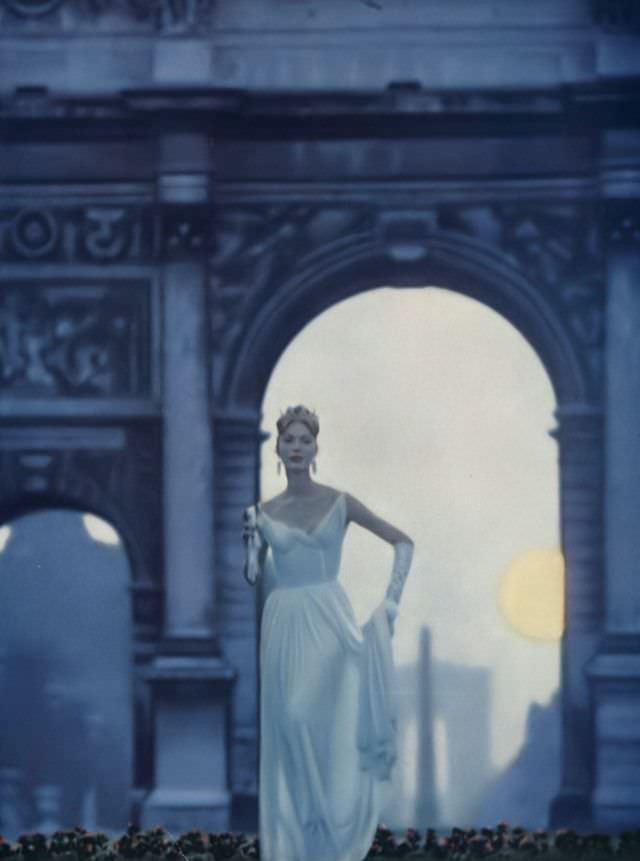
Framed by a monumental stone arch, a lone model stands with the calm authority of a statue, her posture set to emphasize line and balance. The scene’s cool, bluish cast and soft focus lend the moment a dreamlike hush, as if the city has been pushed into the background to make room for couture. Even without a crowded runway, the architecture supplies grandeur, turning a fashion image into something closer to a classical tableau.
At the center, the white crêpe gown attributed to Grès falls in a continuous, liquid column before breaking into disciplined pleats that trace the figure with sculptural precision. The fabric appears to “flow out of itself,” gathering and releasing in controlled ripples that read like drapery studies translated into high fashion. Long gloves, a tidy coiffure, and a small handheld accessory sharpen the silhouette, keeping the look unmistakably mid-century while allowing the dress’s construction to remain the main event.
Published in Vogue on October 1, 1957, the photograph speaks to the era’s fascination with modern elegance expressed through ancient principles—proportion, restraint, and the art of drape. Grès’s reputation for pleating and goddess-like forms is echoed here in the interplay between soft textile and hard stone, couture and monument. For viewers searching fashion history, haute couture, or 1950s Vogue editorials, this image distills a lasting idea: true luxury can be quiet, architectural, and meticulously made.