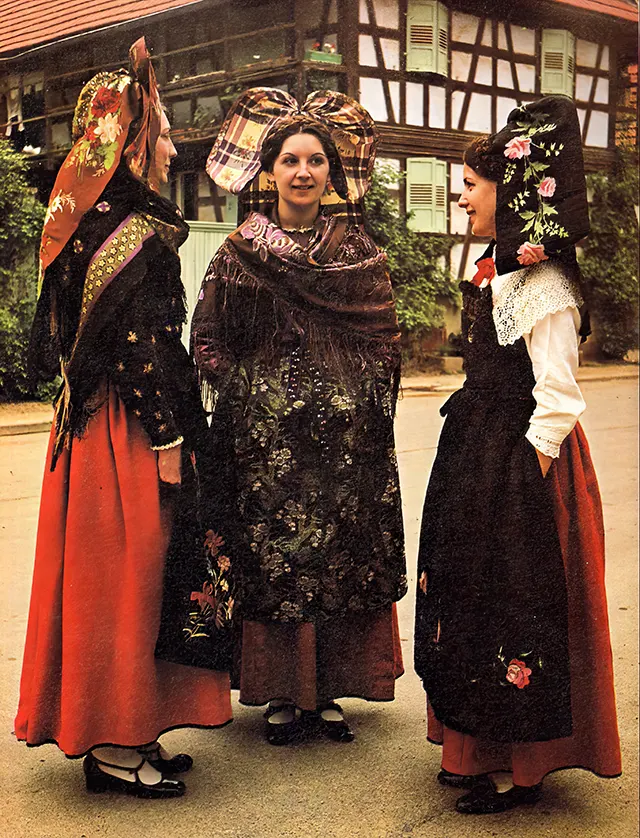
Three women stand in conversation outdoors, dressed in traditional Alsatian costume whose rich textures immediately draw the eye: long red skirts, dark embroidered overdresses, and lace at the collar. Each wears a distinctive Schlupfkapp headpiece, the iconic bow-like headdress associated with Alsace, rendered here in different fabrics and colors—from floral prints to bold checks—showing how personal taste could live within a shared regional style.
Behind them rises a half-timbered house with pale shutters, an architectural backdrop that reinforces the sense of place and continuity. The scene feels informal rather than staged; their faces are turned toward one another as if swapping news, while the clothing does the quiet work of signaling community, tradition, and belonging. Details like the fitted bodices, patterned shawls, and polished shoes underline the care invested in everyday presentation when attire carried social meaning as well as beauty.
Schlupfkapp culture has long functioned as more than fashion, serving as a visual shorthand for Alsatian identity amid shifting borders and competing influences. In this photo, the headdresses become a kind of language—speaking of heritage, craft, and the role of women as keepers of local custom. For readers searching Alsace traditional dress, Alsatian headdress history, or European folk costume, the image offers a vivid reminder that clothing can preserve memory as powerfully as monuments.