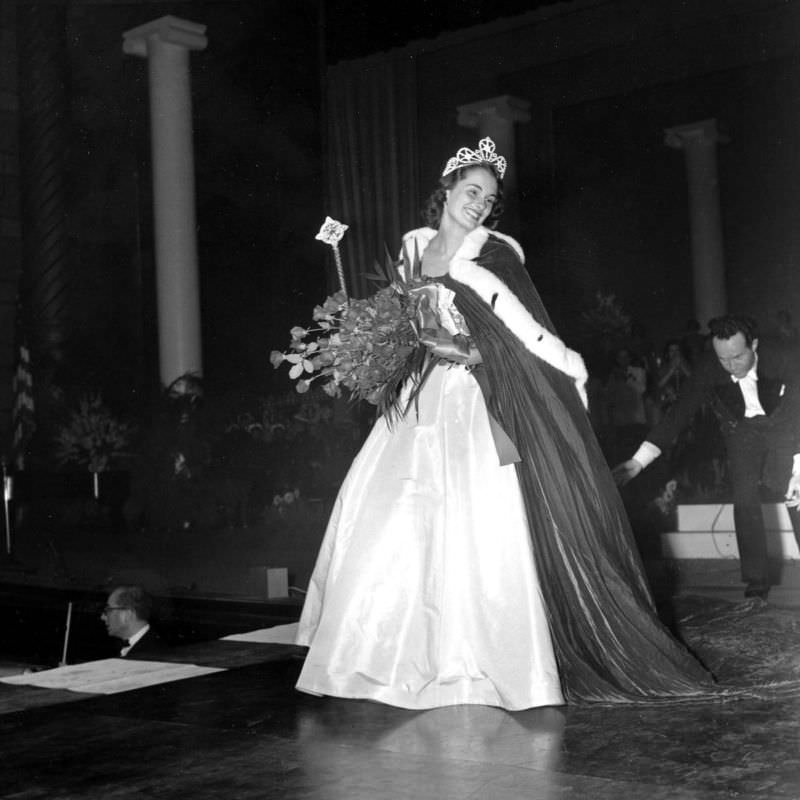
Under the stage lights, Yolande Betbeze steps along the runway with a bright, unguarded smile, her crown catching the glow above a formal evening gown. A sweeping cape trails behind her in dramatic folds, while a large bouquet—still lush and irregular like it was gathered in a hurry after the announcement—rests confidently in her arms. Tall columns and dark curtains frame the scene, lending the moment a theatrical grandeur that pageant culture of the era loved to project.
In 1950, the Miss America runway functioned as both spectacle and social signal, spotlighting polished femininity, poise, and the aspirational glamour of postwar American fashion. The silhouette of the dress—full skirt, fitted bodice, and satin sheen—speaks to mid-century taste, while the staging suggests a carefully choreographed coronation ritual meant for audiences in the hall and readers at home. Even the candid tilt of her head feels like a practiced balance between spontaneity and presentation, a hallmark of beauty pageants as mass entertainment.
Beyond the glitz, the photograph reads as a compact history of cultural expectations in transition, when pageant winners were marketed as symbols of grace, confidence, and national optimism. The presence of attendants at the edge of the runway hints at the machinery behind the moment—hands adjusting hems, managing timing, and keeping the spotlight fixed on the winner’s walk. For anyone researching Miss America history, 1950s fashion, or American popular culture, this runway image of Yolande Betbeze captures the pageant’s blend of glamour, performance, and public imagination.