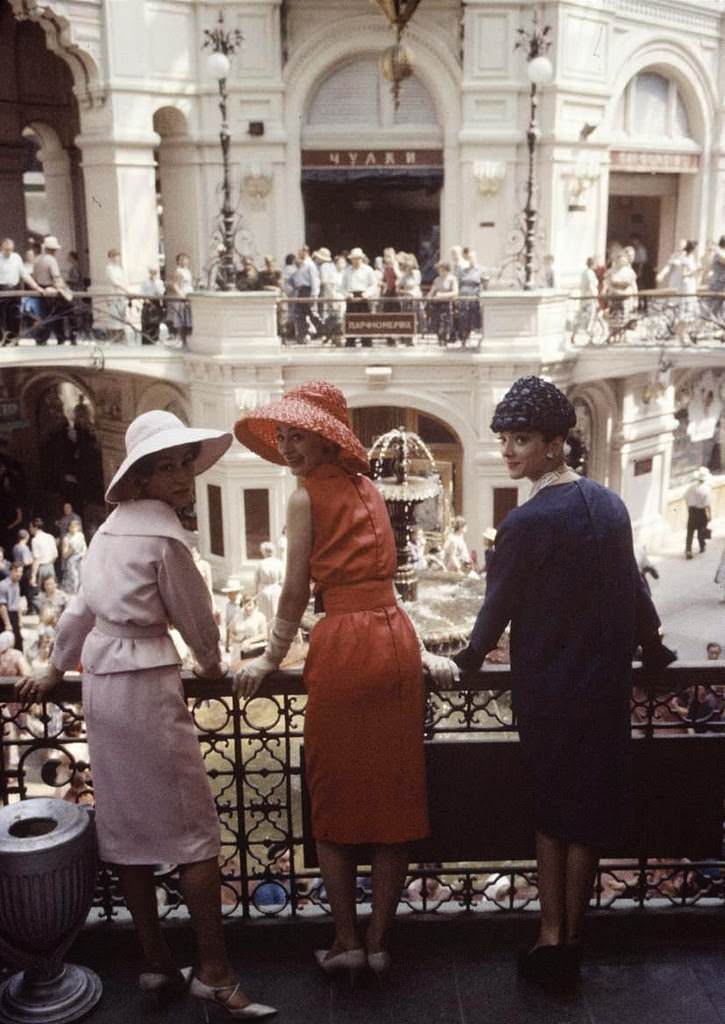
Above a bustling indoor arcade, three impeccably dressed women pause at an ornate balcony rail, their tailored silhouettes and dramatic hats turning the crowd below into a living backdrop. A fountain churns at the center of the space, while tiers of onlookers line the galleries, creating the sense of a public stage where every glance matters. The contrast between the refined couture styling—gloves, fitted waists, careful posture—and the everyday movement around them hints at why Western fashion could feel so startling in Moscow in 1959.
Color makes the moment even sharper: a pale suit and wide brim on the left, a vivid red dress in the middle, and a deep blue ensemble on the right, each look distinct yet unmistakably coordinated in its elegance. Their backward glance toward the camera reads like confidence, even playful defiance, as if aware they’re part of a cultural collision. Architectural arches, decorative lamps, and Cyrillic signage anchor the scene in the Soviet urban world, where style was both visible and quietly contested.
Fashion, in this frame, becomes more than clothing—it’s diplomacy, curiosity, and spectacle condensed into a single balcony view. The photo evokes the “fashion shock” suggested by the title: Dior-like glamour appearing amid Soviet crowds, inviting stares, conversation, and comparison. For readers interested in Cold War culture, Moscow street life, and the history of haute couture behind the Iron Curtain, this image captures the precise instant when aesthetics themselves became newsworthy.