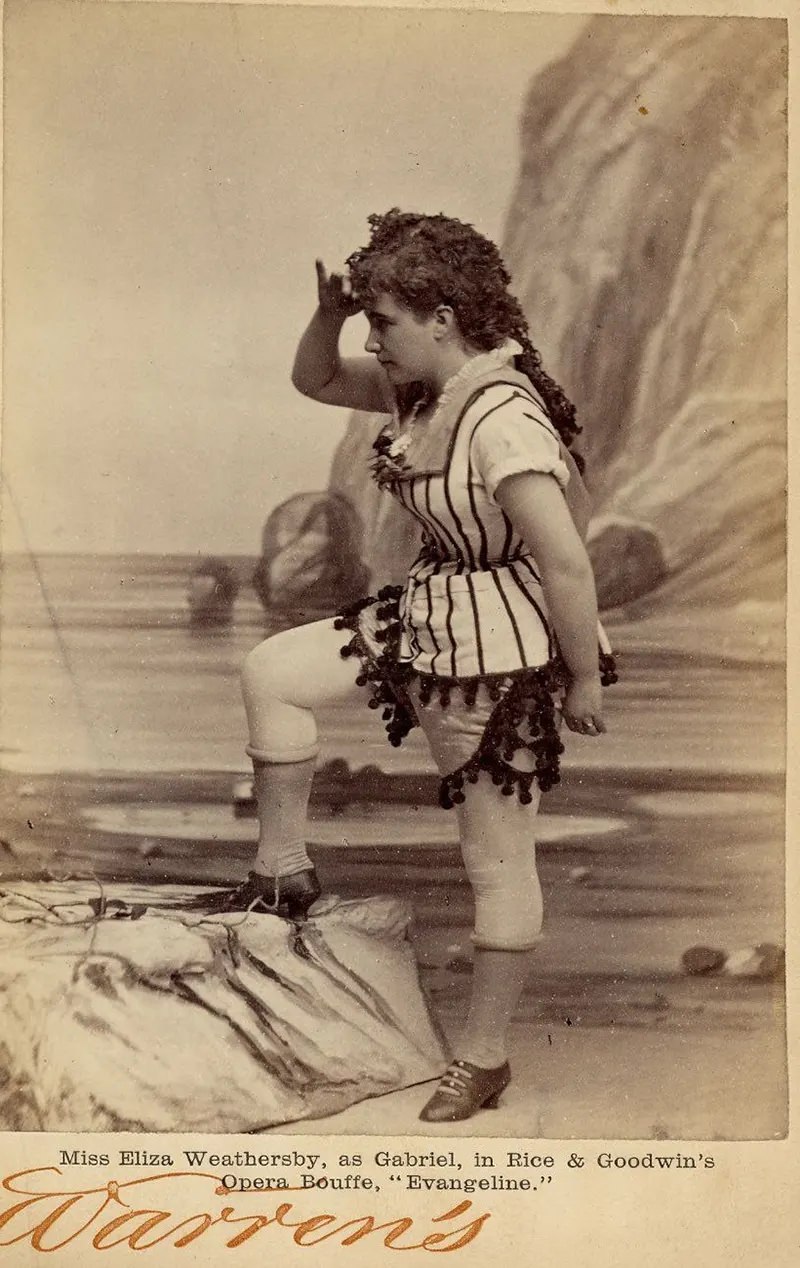
Perched on a painted rock and peering into the distance, Eliza Weathersby strikes a bold, theatrical pose as Gabriel in Rice & Goodwin’s opera bouffe “Evangeline,” a production associated with the Boston Museum in 1877. The stage setting suggests an outdoor scene—water, shoreline, and a looming cliff rendered in soft studio tones—while her raised hand shades her eyes as if searching the horizon. It’s the kind of frozen moment that reads instantly, even without dialogue: comic opera storytelling distilled into a single, legible gesture.
Costume details anchor the photograph in Victorian performance culture, where character types and gender play were often signaled through clothing and stance. Weathersby wears a fitted, striped bodice with decorative trim, short sleeves, and a ruffled collar, paired with pale tights and sturdy lace-up shoes suited for stage movement. The curly wig and confident, forward-leaning posture amplify the “breeches role” effect, presenting Gabriel as energetic and adventurous while still allowing the performer’s persona to shine through.
Along the bottom margin, the printed caption identifies “Miss Eliza Weathersby, as Gabriel, in Rice & Goodwin’s Opera Bouffe, ‘Evangeline,’” turning the image into both souvenir and advertisement. Such theater portraits circulated widely, promoting popular shows and the stars who carried them, and they now serve as vivid records of 19th-century fashion, entertainment, and the visual language of burlesque and opera bouffe. For modern viewers searching for Boston Museum memorabilia, Victorian stage costume inspiration, or “Evangeline” theater history, this portrait offers an intimate glimpse into how performance was packaged for the public eye.