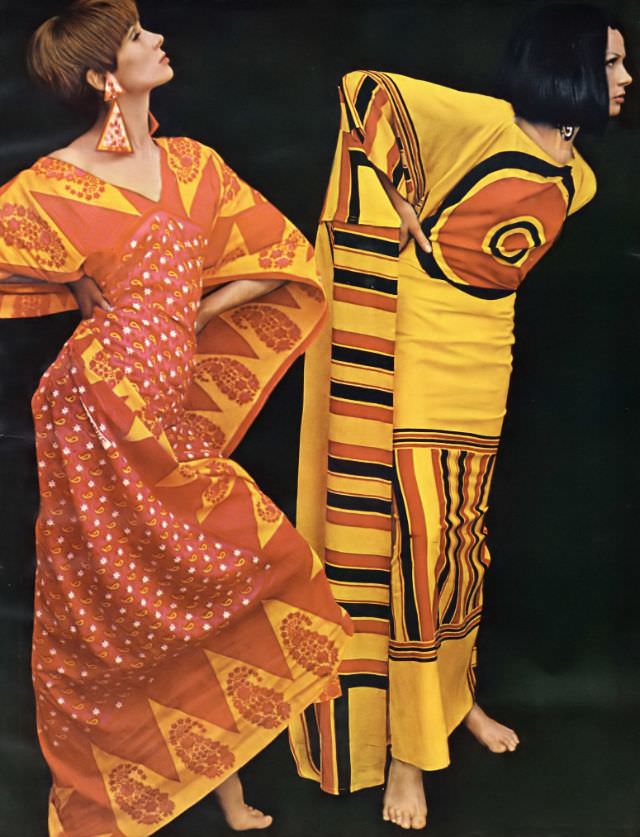
Bold color dominates this July 1966 fashion scene, where two models pose in printed cotton gandurahs associated with Kenya, their silhouettes set crisply against a deep, dark studio backdrop. One figure turns in profile with a lifted chin and sculptural earrings, her dress swaying in warm reds and oranges with geometric motifs. Beside her, a second model angles away, wrapped in luminous yellow with graphic bands and circular forms, the fabric draped to emphasize both structure and movement.
The styling leans into the late-1960s appetite for global-inspired design and high-impact pattern, translating traditional garment shapes into editorial fashion language. Bare feet and minimal accessories keep attention on the textiles—the weight of the cotton, the sharpness of the prints, and the way long sleeves and panels create rhythm as the bodies pivot. The result is poised and sensual without overt theatrics, a controlled interplay of elegance and attitude that fits the era’s modernist eye.
As a piece of historical fashion photography, the image works on two levels: an advertisement for style and a snapshot of cultural exchange in the visual economy of the 1960s. The composition relies on contrast—warm pigment against black space, bold geometry against soft drape—to make the garments read instantly, even at a glance. For viewers searching fashion history, African-inspired textiles, or 1960s editorial aesthetics, these Kenyan gandurahs offer a vivid example of how print, cut, and pose can turn clothing into a statement.