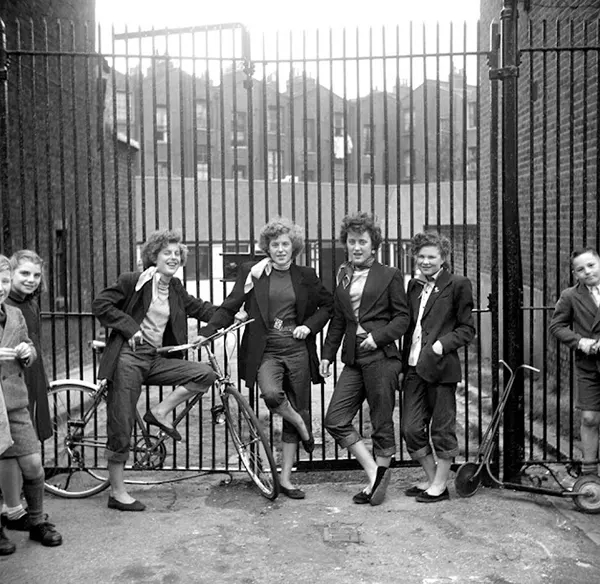
Leaning against a tall iron gate, a cluster of young Teddy girls turn the street into a stage, all sharp jackets, rolled-up trousers, and confident stances. Their hair is carefully styled into soft waves and curls, and the mix of fitted blazers with open collars hints at the era’s love of tailoring with a rebellious twist. Bicycles and scooters crowd the foreground, suggesting an everyday neighborhood scene where style mattered as much as getting from one place to another.
In the 1950s, Teddy culture reworked Edwardian-inspired fashion into working-class youth identity, and photos like this make that attitude tangible. The silhouettes are purposeful—structured shoulders, cropped hems, and practical shoes—balancing toughness with playful flair. Even without a formal backdrop, the clothing reads as a statement: a deliberate look meant to be seen, remembered, and copied.
Behind them, brick buildings and the stark geometry of the gate frame the group like a candid fashion portrait, anchoring the image in postwar urban life. The pose-and-lean choreography feels spontaneous yet self-aware, a snapshot of how subcultures advertised themselves long before social media. For anyone searching vintage street style, Teddy girls fashion, or 1950s youth culture, this scene offers a vivid reminder that cool has always been a kind of performance.