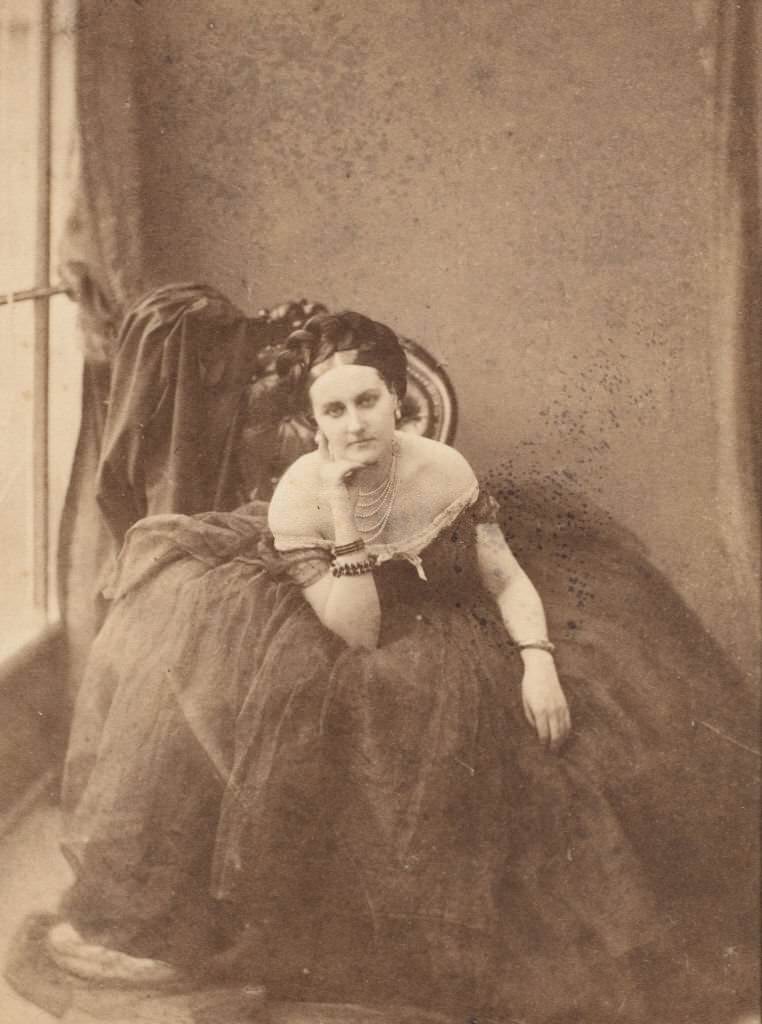
A young woman lounges in a studio interior, her body angled toward the light from a tall window while her eyes meet the viewer with unhurried confidence. She props her chin on one gloved hand, letting the pose do as much speaking as her expression; the title, “The Gaze,” feels earned in the quiet tension between performance and candor. The plain backdrop and soft, sepia tones keep attention fixed on her face and the deliberate stillness of early photography.
Fashion becomes the true architecture of the scene: a wide crinoline skirt spreads outward in layered fullness, turning her seated figure into a sculptural silhouette associated with mid-19th-century women’s dress. An off-the-shoulder bodice reveals the period’s taste for bare neckline and carefully arranged hair, while bracelets and a multi-strand necklace add a gleam of respectability and display. Even the draped fabric on the chair echoes the dress’s volume, surrounding her in textiles that signal status, femininity, and social codes.
Set in 1856, the portrait offers a compact study of Victorian-era culture—how women were framed, how they framed themselves, and how clothing shaped public identity. The photographer’s use of window light softens contours and lends the scene an intimate, almost conversational mood despite the formality of the medium. For readers searching 19th-century fashion history, crinoline dress imagery, or Victorian portrait photography, “The Gaze” stands as a memorable meeting point of style, posture, and presence.