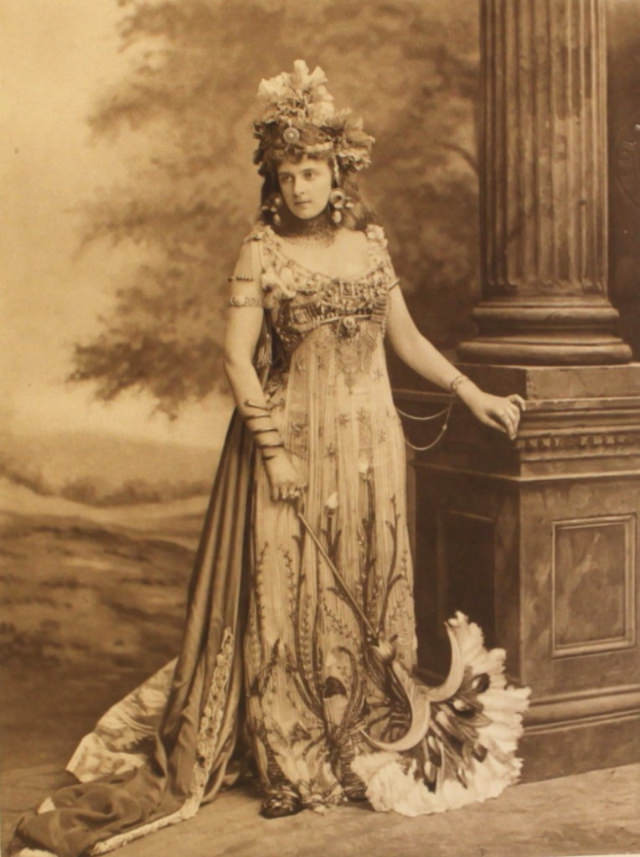
Draped in an ornate costume inspired by Gustave Flaubert’s *Salammbô*, the Hon Mrs Algernon Bourke poses as the Carthaginian princess with a composed, theatrical stillness. A towering headdress of leaves and blossoms frames her face, while heavy jewelry and armbands emphasize an exoticized antiquity that late-Victorian society adored. The long, embroidered gown falls in rich panels to the floor, its patterns and trailing fabric designed to read as ancient splendor through a 19th-century lens.
Set against a studio backdrop and anchored by a monumental column, the portrait borrows the visual language of classical architecture to elevate fancy-dress into something like history painting. Her hand rests lightly on the pedestal, a chain looping from wrist to waist as if part ornament, part prop, and the dramatic train spills outward in a flourish meant for the camera. The sepia tone softens details but heightens the mood, turning costume, posture, and texture into a single narrative of cultivated fantasy.
Linked to the celebrated Devonshire House Ball of 1897, images like this reveal how elite masquerade blended literature, archaeology-inspired design, and high fashion into a public performance of taste. Choosing Salammbô signaled familiarity with popular French fiction and the era’s fascination with the ancient Mediterranean, refracted through Orientalist imagination. For modern viewers searching the history of costume, Victorian society balls, and the cultural afterlife of Flaubert’s heroine, this portrait stands as a vivid record of how storytelling was worn—quite literally—on the body.