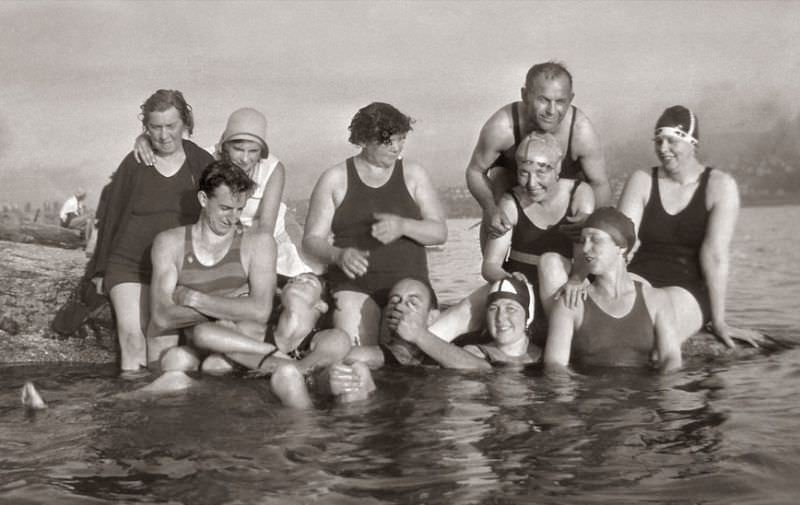
A cluster of beachgoers gathers at the water’s edge, half seated on the pebbly shore and half buoyed by the shallows, their relaxed poses turning a simple swim into a social ritual. Men and women lean into one another for balance and warmth, smiling or squinting toward the camera as the surf laps at their knees. In the soft distance, the coastline and hazy sky frame the scene, giving it that unmistakable seaside atmosphere associated with interwar leisure.
Swimwear here reflects the 1930s push toward streamlined practicality without abandoning modesty: dark, one-piece suits with broad straps, higher coverage, and sturdy knit fabric designed for movement as much as appearance. Several bathers wear snug swim caps, a period detail that signals both fashion and function, keeping hair controlled against saltwater and wind. The overall effect is “elegance” defined less by ornament and more by clean lines, athletic silhouettes, and an emerging confidence in public sun-and-sea culture.
Beyond the clothes, the photograph speaks to changing ideas about recreation, health, and modern style, when seaside holidays and communal bathing became widely celebrated markers of contemporary life. The easy camaraderie—arms draped over shoulders, bodies arranged comfortably close—suggests that the beach was a place to be seen, but also to belong. For anyone tracing the evolution of 1930s swimwear through vintage photos, this moment captures fashion and culture intertwined: practical garments, playful intimacy, and the everyday glamour of a day at the shore.