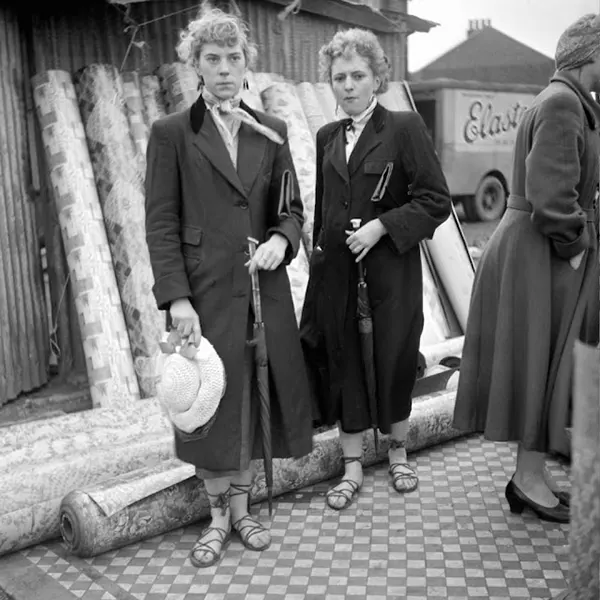
Two young Teddy girls stand with unmistakable poise, their long, tailored coats falling almost to the calves and their hands occupied with umbrellas like accessories of rank. Curled hair frames serious faces, and the styling leans into a deliberately “grown-up” silhouette—sharp lapels, neat layers, and that cool, unblinking confidence often associated with 1950s youth fashion. One holds a light-colored hat, an extra flourish that hints at weekend outings and the pleasure of being seen.
Behind them, bolts of fabric are stacked and rolled in a rough, working backdrop that contrasts with the careful polish of their look. The patterned pavement underfoot and the cluttered surroundings suggest a street-side market or textile district, where everyday commerce meets the spectacle of style. Even without bright color, the photograph makes texture do the talking: heavy wool, crisp collars, and the shine of well-worn shoes.
Teddy culture was never just clothing; it was a statement about class, modernity, and the desire to remake tradition into something personal and provocative. Here, the Edwardian-inspired attitude—structured outerwear, deliberate accessories, and a calm, almost defiant stance—turns a mundane setting into a stage. For anyone searching vintage fashion inspiration, 1950s street style, or authentic Teddy boys and girls imagery, this scene distills the era’s mix of rebellion and elegance into a single, unforgettable moment.