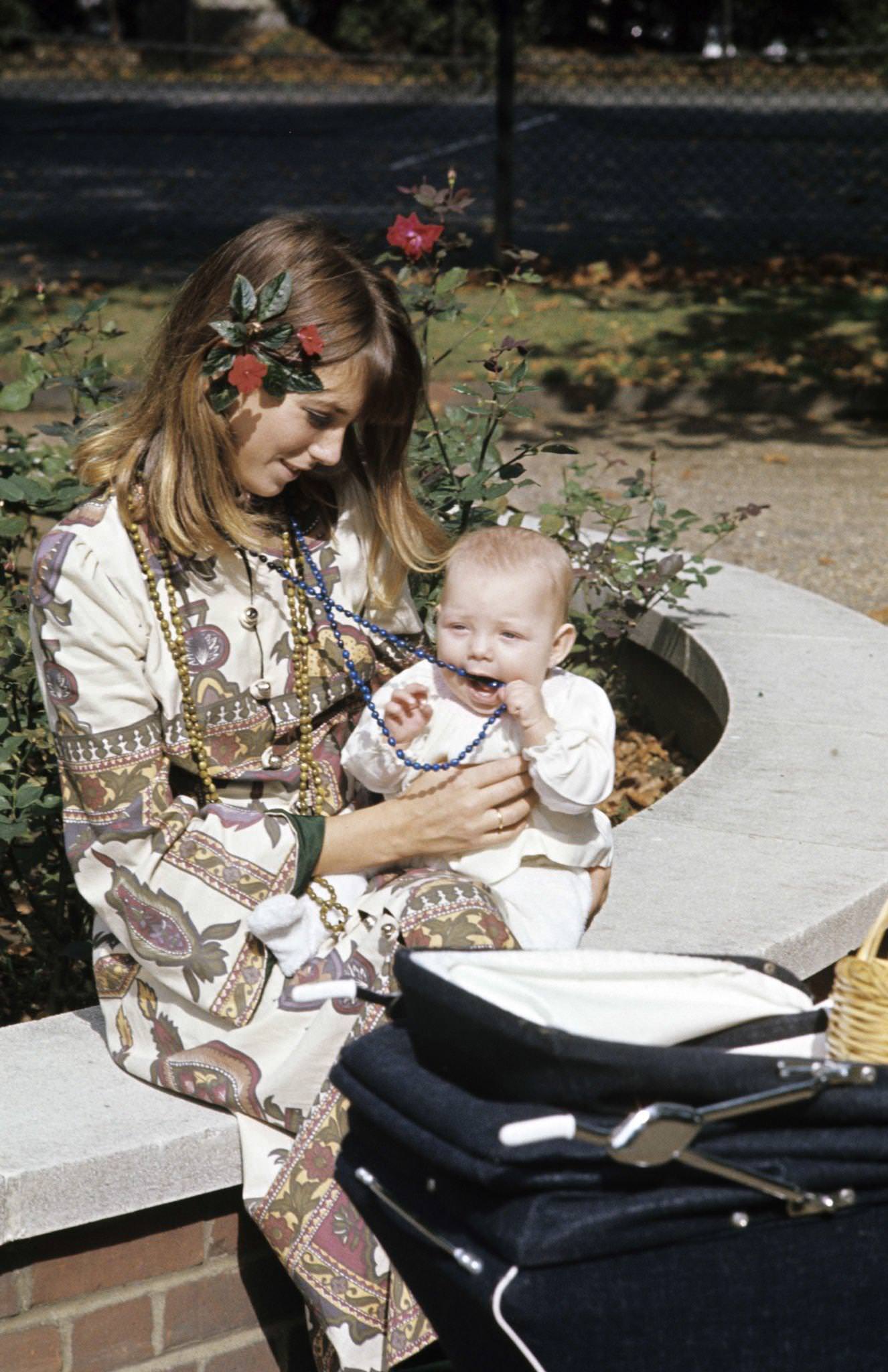
Sunlit and quietly intimate, the 1967 scene pairs Jane Birkin with John Crittle in the easygoing spirit of hippie fashion, seated outdoors beside a low, curved stone border and garden roses. Birkin’s long patterned dress—rich with swirling, paisley-like motifs—signals the decade’s love of bold prints, while layered bead necklaces and a flower tucked into her hair evoke the era’s handmade, bohemian styling. In the foreground, a pram anchors the moment in everyday life rather than staged glamour, letting the setting feel like a park or neighborhood green.
The photograph’s charm lies in its small details: the soft fall of hair over Birkin’s cheek, the way the beads drape and catch the light, and the baby’s curious grip on a strand of necklace. That playful interaction turns psychedelic-inspired accessories into something domestic and tender, a reminder that 1960s counterculture aesthetics often blended with ordinary routines. Even the surrounding foliage and scattered leaves add texture, reinforcing the natural, back-to-the-land mood that shaped so much late‑sixties style.
As a piece of fashion and culture history, the image reflects how London’s colorful youth trends filtered into personal wardrobes—printed textiles, folk influences, and relaxed silhouettes replacing the rigid formality of earlier years. Hippie fashion here reads less as costume and more as lived-in identity: eclectic, comfortable, and expressive, with jewelry and flowers serving as symbols of freedom and softness. Seen today, it offers an SEO-friendly snapshot of 1967 bohemian style—psychedelic patterns, beaded accessories, and the understated intimacy that made the era’s look feel revolutionary.