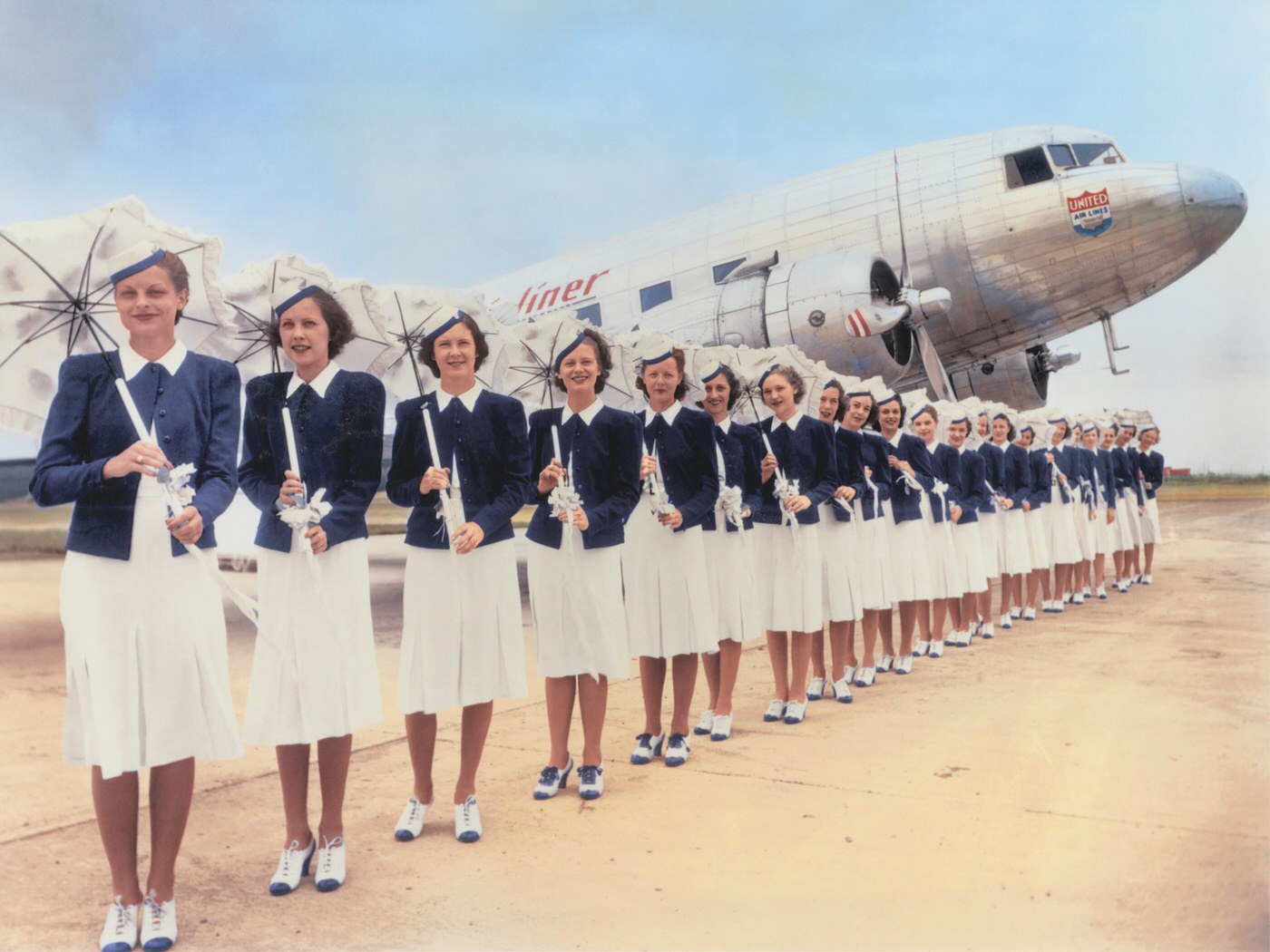
Lined up on the tarmac beneath the gleaming nose of a United Air Lines “Mainliner,” a long row of flight attendants turns uniformity into spectacle. Each woman wears a tailored navy jacket over a crisp white skirt, topped with a small matching cap, while white parasols create a repeating pattern that draws the eye down the line. The composition feels like a brand promise made visible: order, polish, and confidence in an era when commercial aviation still carried the thrill of novelty.
Details in the clothing speak to the late-1930s balance between practicality and elegance, when airline uniforms leaned toward formal daywear rather than the bold experimentation that would arrive later. Structured shoulders, neat collars, and coordinated shoes emphasize discipline, while the parasols add a touch of leisure and staged glamour, as if air travel were as much an event as a means of transport. Even the aircraft’s polished metal body and prominent United emblem reinforce the message that modern technology and refined service belonged together.
For readers tracing the evolution of flight attendant fashion from the 1930s through the 1970s, this 1939 United Airlines uniform moment sits firmly in the “Golden Age” of airline style. It hints at how airlines used uniforms as cultural shorthand—professionalism, safety, and aspirational modern living—long before the Mod Era reshaped silhouettes and color palettes. Seen today, the image serves as a window into the aesthetics of early air travel and the carefully curated public face of an emerging industry.