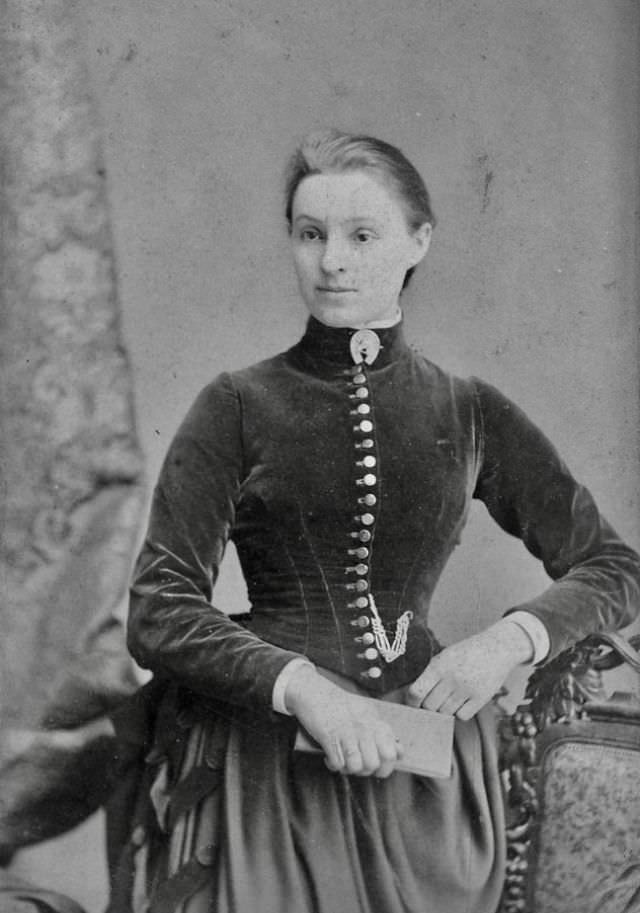
A young woman poses with steady composure, her gaze turned slightly off to the side as if caught between the photographer’s instruction and her own private thoughts. The fitted bodice fastens in a long, orderly line down the front, the fabric pulled smooth over a sharply defined waist that signals the hidden engineering of the Victorian corset. In her hands she holds a small card or letter, a quiet prop that lends the portrait an air of everyday respectability rather than theatrical display.
Clothing in the late 19th century was built on structure, and this image makes that foundation visible even without showing the undergarment itself. The tight silhouette—narrow waist, lifted posture, and controlled drape of the skirt—reflects how corsetry shaped not only fashion but the way women were expected to stand, move, and be seen. Details like the high collar and the neat cuffs reinforce the era’s preference for polished restraint, while the decorative accents at the waist hint at how practicality and ornament often met in Victorian dress.
Behind the formality lies a broader story about gender, class, and the daily discipline of clothing in Victorian culture. Corsets could signal refinement and modernity, yet they also invite discussion about comfort, health debates, and the social pressures tied to idealized proportions. As a piece of historical fashion photography, the portrait offers a close look at the period’s signature silhouette, making it a compelling reference for anyone searching for Victorian women, tight corsets, and late 19th-century style.