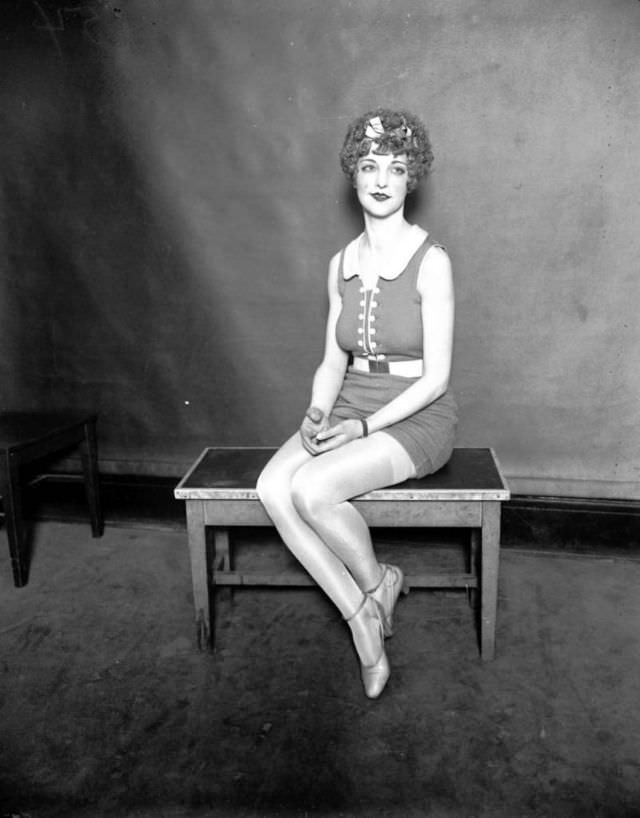
Maebelle Soller sits poised on a simple wooden platform, her ankles crossed and hands folded with practiced composure, offering the camera a calm, direct gaze associated with the era’s beauty contestants. A sleek one-piece outfit with a lace-up front panel and contrasting waistband emphasizes the sporty, streamlined silhouette that defined 1920s swimwear and stage presentation. Her short, tightly waved hairstyle and decorative headpiece complete a look that balances youthful modernity with carefully curated glamour.
Behind her, the setting is spare: a plain studio backdrop, bare floor, and a lone chair at the edge of the frame, all of it drawing attention to the contestant rather than the surroundings. That minimal staging hints at how pageant photography worked as both documentation and publicity, creating an image that could travel easily in newspapers and promotional materials. The lighting softens the scene while keeping the figure crisp, turning an ordinary platform into a small, controlled stage.
Linked to the Miss Chicago contest in 1926, the portrait reflects the growing popularity of early twentieth-century American beauty pageants, where fashion, performance, and public spectacle met. These competitions sold more than looks; they promoted new standards of confidence, leisure, and “modern” femininity, with swimsuits becoming a central—often debated—symbol of changing social norms. For readers searching the history of Miss America-era contests, 1920s fashion, or vintage pageant culture, this image offers a clear window into the glitz and grit of the period’s publicity-driven glamour.