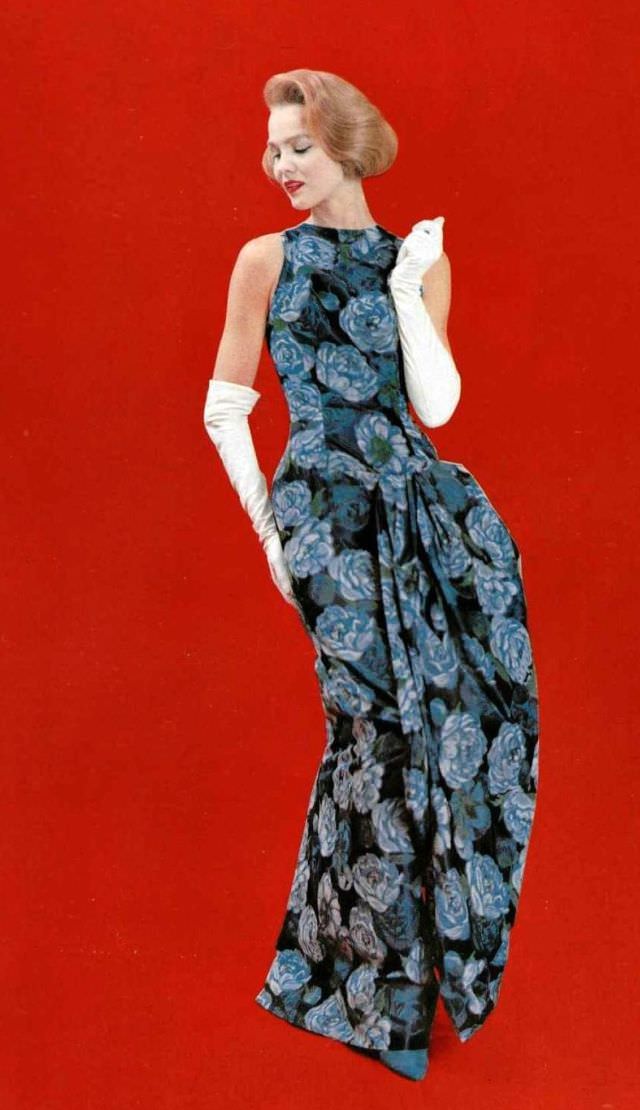
Against a vivid red studio backdrop, a poised model turns her head in profile, letting the line of her neck and shoulders lead the eye down the dress. Her sleeveless silk-print evening gown by Grès falls in a long, elegant column, the dark ground scattered with oversized blue floral motifs that read like painted blooms. White opera gloves sharpen the contrast and add a note of formal theatre, while the softly sculpted 1950s hairstyle and red lipstick complete the polished couture look.
What makes the gown feel unmistakably haute couture is the control of volume: the skirt’s fabric gathers and releases in measured drapes, creating movement without breaking the clean silhouette. The floral print, bold yet disciplined, plays against the simplicity of the bodice, and the model’s relaxed pose suggests ease within luxury. Jacques Decaux’s fashion photography emphasizes clarity and color—an editorial sensibility that turns fabric, fit, and gesture into a single graphic statement.
Dated 1958, the image sits at a crossroads of mid-century style, when evening wear balanced streamlined modernity with the romance of sumptuous textiles. Grès, celebrated for her mastery of draping and sculptural construction, appears here in a mood that is less classical goddess and more urbane, print-forward sophistication. For anyone searching fashion history, 1950s couture, or the legacy of Madame Grès, this photograph offers a striking record of how atelier craftsmanship and studio artistry could make an evening gown feel timeless.