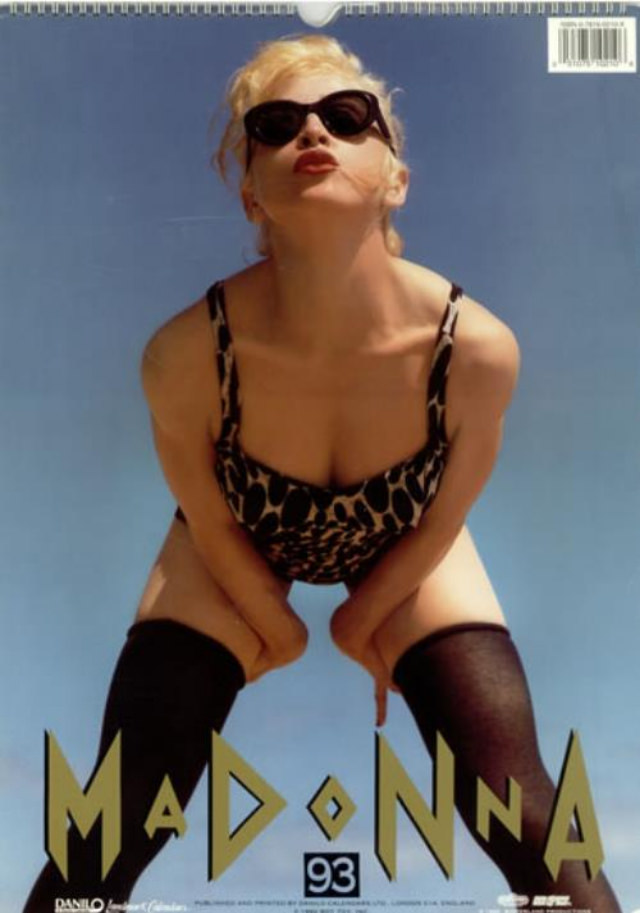
Leaning toward the lens against a clear blue backdrop, Madonna strikes a deliberately theatrical pose that feels equal parts pin-up, pop-art provocation, and fashion editorial. Oversized black sunglasses, bright lipstick, and a leopard-patterned bodysuit frame a look that is unmistakably 1990s in its confidence and stylized glamour, while the thigh-high stockings sharpen the silhouette into something graphic and bold. The calendar format is visible right on the page, with the spiraled top edge and barcode reminding you that this is a mass-produced object designed for bedrooms, studios, and backstage walls.
Official calendars like this weren’t just merchandise; they were monthly chapters in an evolving image campaign, blending celebrity photography with the era’s magazine aesthetics. The composition plays with power and performance—an exaggerated forward stance, a lifted chin, and a cool, guarded face behind dark lenses—turning a simple studio setup into a statement about control, desire, and spectacle. Even the typography at the bottom, angular and attention-grabbing, functions like a logo for an attitude as much as for a name.
Seen now as a piece of 1990s fashion and culture ephemera, the page captures how pop stardom traveled through everyday items and how fans curated identity through what they displayed. The styling nods to the decade’s fixation on supermodel sheen, nightclub edge, and high-contrast sex appeal, packaged into a collectible that could be flipped, hung, and revisited. In that sense, the calendar becomes a time capsule—part promotional artifact, part design object, and part snapshot of Madonna’s enduring talent for making imagery feel like an event.