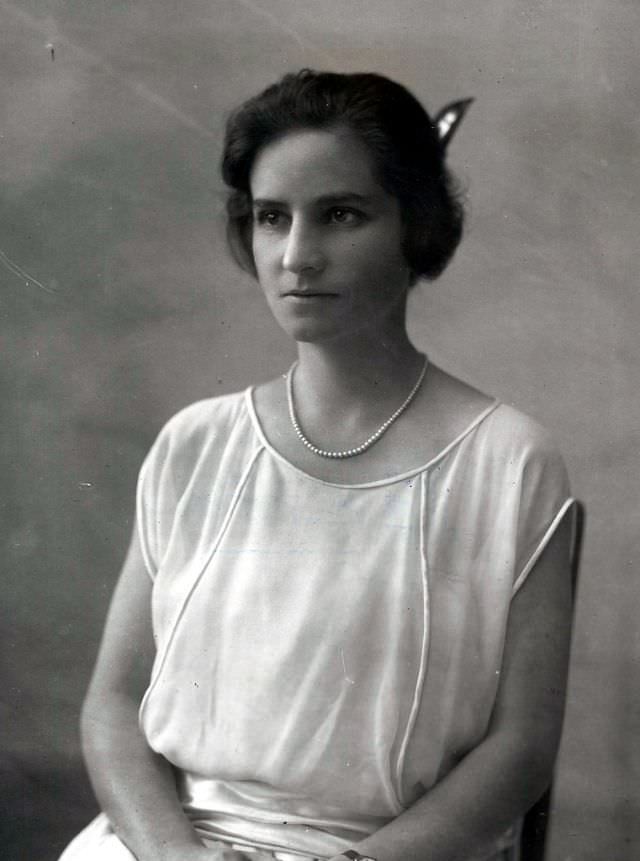
Soft studio light falls across a composed young woman, her gaze angled slightly away from the lens as if caught between thought and performance. The plain backdrop keeps attention on her face and posture, while the careful photographic tonality gives the portrait a calm, intimate authority. Minor specks and surface marks in the print quietly underline its age, the kind of wear that turns a fashionable moment into an artifact.
Her look speaks to 1920s style without needing extravagance: a sleeveless, loose-cut dress with simple seam detailing, paired with a neat strand of pearls that sits at the collarbone. Hair is styled close and controlled, echoing the era’s modern silhouette, and a small accessory tucked at the side adds a hint of flourish. The overall effect is modern and practical—glamour expressed through clean lines, understated jewelry, and confidence rather than ornament.
Set against the title’s Melbourne context, the portrait reads as part of a broader story of women’s fashion and culture in the interwar years, when new ideals of movement and independence reshaped wardrobes and social life. Studio portraits like this were more than keepsakes; they were declarations of identity, taste, and belonging in a rapidly changing city. For anyone searching 1920s Melbourne fashion, flapper-era portraits, or Australian women’s cultural history, this image offers a quietly vivid window into the period’s everyday elegance.