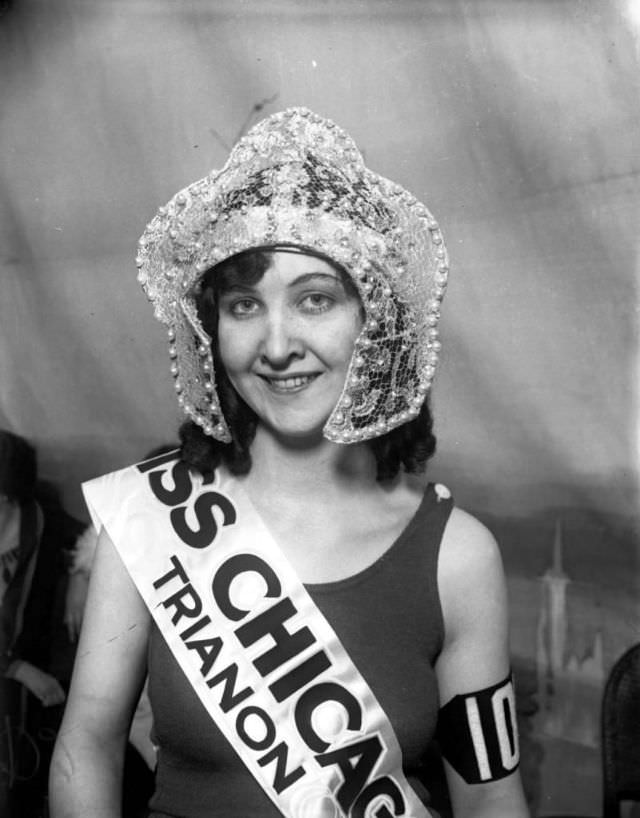
Smiling beneath an ornate, pearl-trimmed headdress, Mae Greene poses with the confident ease of a newly crowned hometown celebrity. A sash across her swimsuit reads “Miss Chicago,” anchoring the portrait in the heyday of 1920s beauty contests, when pageantry blended theatrical costume with modern, athletic silhouettes. The close framing keeps attention on her expression and regalia, turning a publicity moment into a lasting emblem of Jazz Age glamour.
The title notes she was chosen from 4,000 rivals, a detail that speaks to how quickly these competitions became mass entertainments fueled by newspapers, crowds, and civic pride. Pageants of the era sold a particular vision of modern womanhood—public-facing, stylish, and camera-ready—while still wrapped in the language of respectability and “queen” symbolism. In that tension between opportunity and expectation lies much of the cultural grit behind early twentieth-century beauty pageants.
Details like the bold lettering on the sash and the numbered armband suggest an organized contest structure, closer to a sporting event than a parlor amusement. The theatrical headpiece evokes stage costume and ceremonial coronations, emphasizing spectacle as much as personal charm. For historians of fashion and culture, this 1926 portrait offers a vivid window into how American cities marketed themselves through pageant winners and how contestants were presented to the public at the dawn of celebrity media.