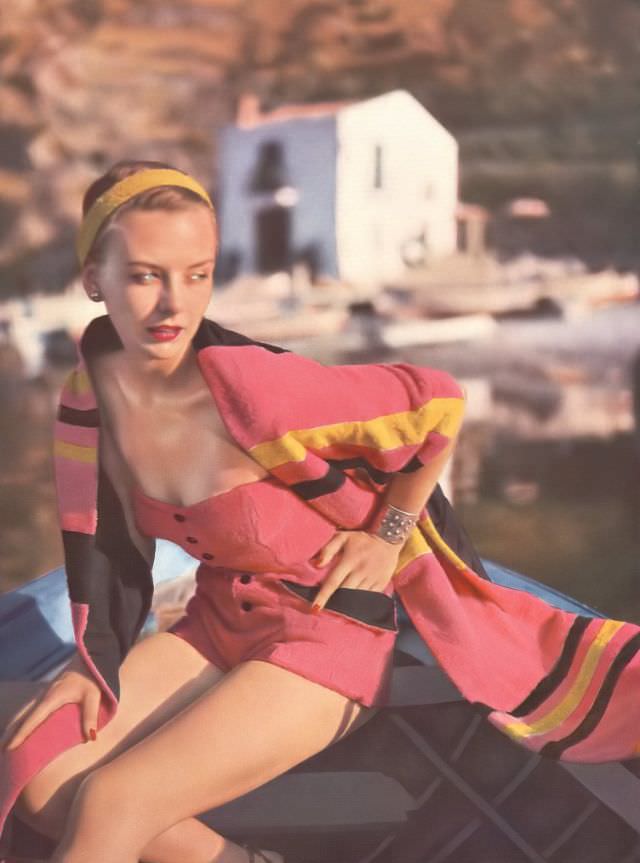
Sun-warmed and poised, Shelagh Wilson lounges with an easy confidence that feels unmistakably mid-century, her gaze turned slightly away as if caught between a private thought and the camera’s call. The Horrockses terry-cloth swimsuit—a buttoned, structured one-piece—sits at the intersection of practicality and polish, while a coordinating wrap in bold bands of color drapes dramatically from her shoulders. A sleek headscarf, red lipstick, and neatly manicured nails complete the look, underscoring how 1950s beachwear could be as carefully styled as an evening ensemble.
Behind her, a waterfront setting blurs into soft shapes: moored boats, reflective water, and a pale building backed by rugged rock, suggesting a fashionable escape to the coast without pinning the scene to a single, named destination. The composition leans into leisurely glamour, using the calm harbor as a stage for contemporary resort fashion rather than pure scenery. Light and color do much of the storytelling here, giving the editorial a sunlit immediacy that would have resonated with readers dreaming of summer holidays and seaside sophistication.
Published in Harper’s Bazaar UK in June 1952, the image speaks to a moment when British fashion photography celebrated optimism, travel, and the modern wardrobe’s versatility. Horrockses, known for crisp design and wearable elegance, appears here in a sporty-luxe register, translating the towel-like comfort of terry cloth into a magazine-ready statement. As a piece of fashion and culture history, the photograph captures how postwar style sold more than clothing—it sold a mood of freedom, refinement, and sunlit possibility.