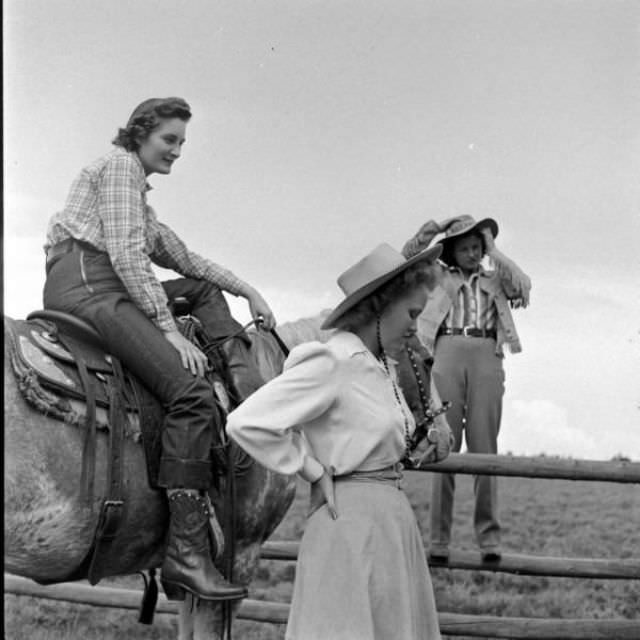
Dusty pasture light and open sky frame a small, candid moment: one woman sits easy in the saddle in a checked shirt, sturdy trousers, and tall riding boots, while another stands at the fence in a brimmed hat and a practical blouse-and-skirt outfit. A third figure lingers behind them, hat tipped and hands near the crown, as if shielding eyes from glare or watching the conversation unfold. The scene feels unposed, closer to everyday ranch life than to a studio Western, and it hints at the work, camaraderie, and confidence that shaped real cowgirl identity in the 1940s.
Clothing does the storytelling here, where function and style meet without apology. Denim or heavy work pants, a tucked-in plaid, and sensible boots speak to riding and chores, while the hat, cinched waist, and neat silhouette suggest how Western fashion traveled between barnyard practicality and town-ready polish. It’s a reminder that “cowgirl fashion” was never just costume; it was a lived wardrobe built for movement, weather, and long days, with details that later became iconic in American Western culture.
Beyond the silver-screen myth, the photograph invites you to read the smaller cues: relaxed posture on horseback, the fence line as a gathering point, and the easy mix of feminine touches with rugged gear. For anyone searching for authentic 1940s cowgirl style, ranch fashion, or the cultural roots of Western wear, this image offers a grounded snapshot of how people actually dressed and carried themselves in the landscape. The result is a richer, more human portrait of American cowgirl life—quietly stylish, undeniably capable, and shaped by the realities of the range.