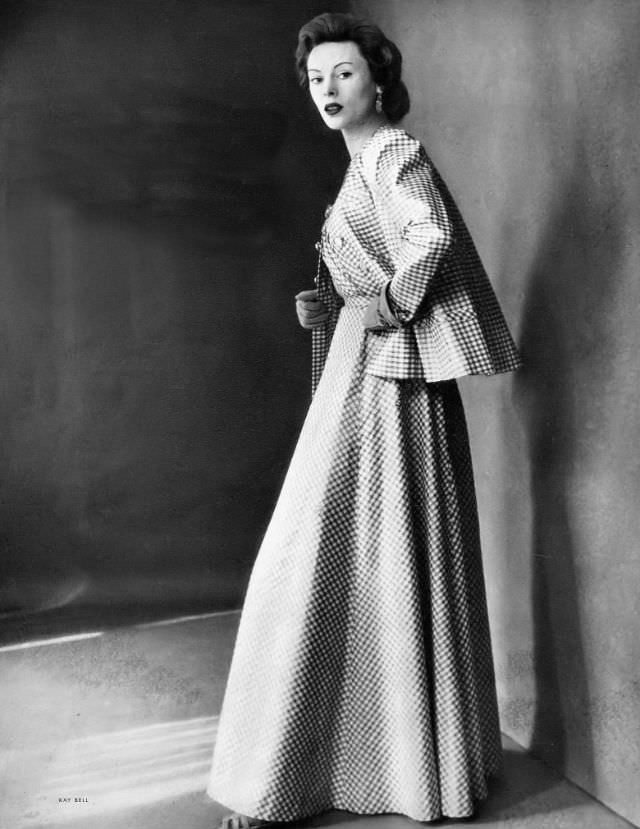
Poised against a softly shaded studio backdrop, Meg Mundy turns in three-quarter profile, her gaze steady and composed as light skims the curve of her cheek and the crisp line of her coiffed hair. The styling feels unmistakably late-1940s: sculpted shoulders, defined waist, and a calm, almost cinematic elegance that lets the garment do the talking. Even without color, the photograph makes the textures readable—fabric catching highlights, shadows pooling into the folds of a floor-length skirt.
Mainbocher’s evening ensemble pairs a long dress with a matching jacket, described as off-white cotton checked with gold Lurex, and the camera leans into that subtle sheen through contrast and tonal sparkle. The check pattern repeats with disciplined precision, while the jacket sits neatly over the bodice, creating a refined silhouette that balances structure and ease. Mundy’s slightly gathered hold at the waist and the gentle flare of the skirt suggest movement held in reserve, the kind of controlled drama that defined high-fashion editorial work.
Published in Harper’s Bazaar in 1948 and associated with Kay Bell’s iconic 1940s fashion photography, the image reflects a postwar appetite for polish, luxury, and modern femininity. Studio simplicity—bare floor, plain wall, and measured lighting—keeps attention on craftsmanship, cut, and the promise of metallic thread woven into everyday cotton. For readers and collectors searching mid-century couture, Harper’s Bazaar history, or Mainbocher’s design legacy, this portrait stands as a quiet but persuasive advertisement for elegance at the end of the decade.