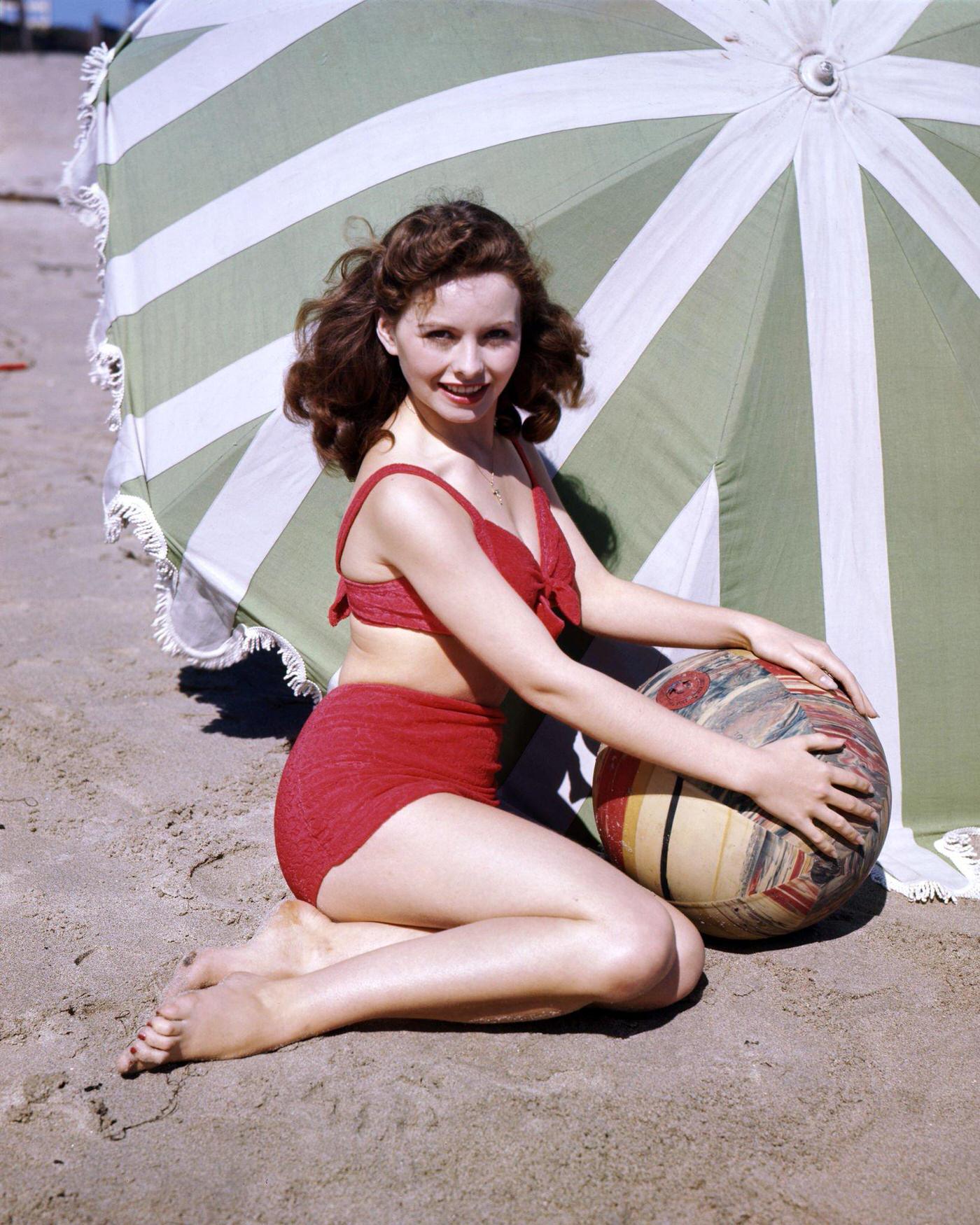
Sunlit sand and a wide, striped beach umbrella frame Jeanne Crain in a confident, carefully posed moment of 1940s leisure. She kneels with an easy smile, cradling a patterned beach ball, while the umbrella’s pale bands throw soft shade across her shoulders and hair. The color palette—warm skin tones, muted greens, and a bold red suit—gives the scene a vivid, magazine-ready clarity that feels both candid and expertly composed.
Her two-piece swimsuit reads as an important mid-century style statement: a structured, bow-front top paired with high-waisted bottoms that echo the decade’s preference for sculpted silhouettes. In the context of wartime and immediate postwar fashion, such designs signaled change—practical in their coverage yet daring in their separation, hinting at the evolving swimwear that would soon reshape beach culture. Details like painted nails, curled hair, and a delicate necklace reinforce the era’s polished glamour even in a casual seaside setting.
Beach photography like this helped normalize new looks by placing them in familiar, playful settings rather than on distant runways. The umbrella, the ball, and the relaxed pose suggest a story of modern recreation—sunbathing, travel, and the growing visibility of screen stars in everyday-inspired scenes. For readers searching mid-century fashion history, 1940s swimwear, or Jeanne Crain beach images, this portrait captures the moment when “two-piece” began to feel less like a novelty and more like the future.