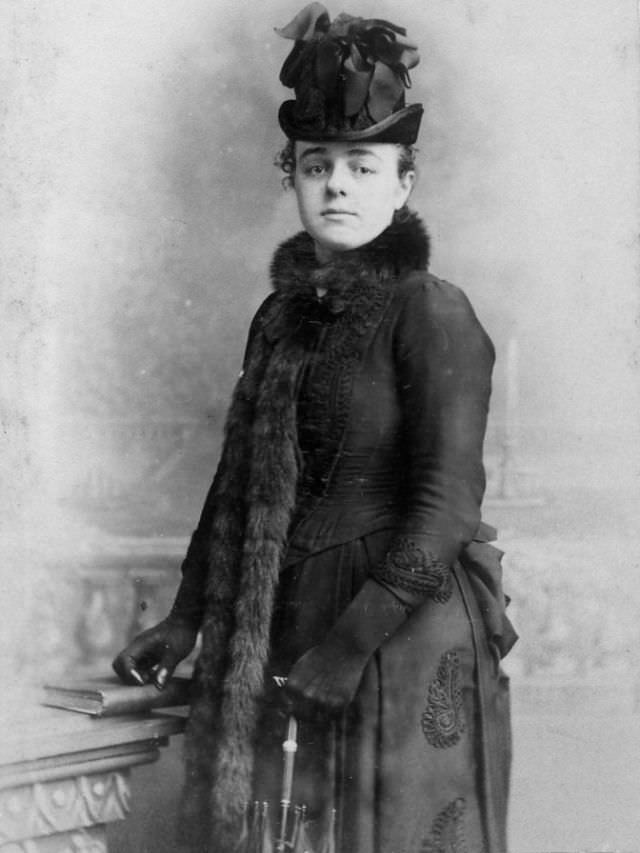
Poised in a studio setting, a well-dressed Victorian woman meets the viewer with a steady, unhurried gaze, her figure framed by the soft blur of a painted backdrop and a carved table at her side. The late-1800s silhouette is clear: a tightly fitted bodice, a structured skirt, and sleeves that carry subtle decoration at the cuffs. She rests one gloved hand near a small book while the other holds a slim parasol or walking stick, everyday accessories that also signaled refinement in fashionable portrait photography.
Her outfit leans toward urban elegance and social display, anchored by a plush fur stole draped down the front and a tall, ornamented hat that rises above neatly arranged hair. Textural contrasts—matte fabric against glossy trim, fur against tailored seams—give the clothing depth even in monochrome, while embroidered or appliquéd motifs along the skirt hint at careful workmanship. Such details speak to the era’s appetite for crafted surfaces and the way women’s fashion merged practicality with conspicuous style.
Beyond documenting a single sitter, the portrait offers a window into Victorian fashion and culture, when clothing communicated respectability, class aspiration, and an awareness of changing trends. The controlled pose, the deliberate props, and the polished ensemble reflect how late nineteenth-century women used photography to present an ideal of modern femininity—self-possessed, decorative, and socially legible. For anyone exploring Victorian ladies, late 1800s fashion, or the history of women’s dress, this image preserves the quiet authority of style in an age of strict etiquette and visual codes.